Category: News

  • I took part in a News Club…

    I took part in a News Club…

    by Pamela Nowicka

    I’m excited…and that doesn’t happen much these days.

    A lot is going on with news/media/content…the swirl of infoentertainmation, legacy media, social media, media moguls, AI slop, influencers, journalists, presenters, personalities, slebs and celebs and a steady churn between them all.

    UPCOMING NEWS CLUBS

    So how on earth is the average punter, trying to get a grip on their life and screen ‘spaces’, supposed to figure it all out?

    I struggle…even as an experienced investigative journalist (Observer, Guardian, BBC).

    Challenging the co-opted liberal media class on issues like climate, inclusion, neoliberalism, Nature and basic reality, I saw my career and life crash and burn for refusing to bend the knee to middle class media gatekeepers of the  information economy and their billionaire bosses. 

    And it’s gotten steadily worse over time.

    But something happened yesterday which gave me back not only my journalistic mojo (go me!) but has thrown a spotlight of change on the convoluted and problematic media landscape. Which will, hopefully, give the average punter the opportunity and tools to have a real say and understanding in creating the kind of media we can trust and rely on in these increasingly complex and difficult times, as old certainties dissolve into a murk of lies, misinformation, bias and hidden agendas while new models of how to live with grace on a burning planet are few and far between.

    So what happened yesterday?

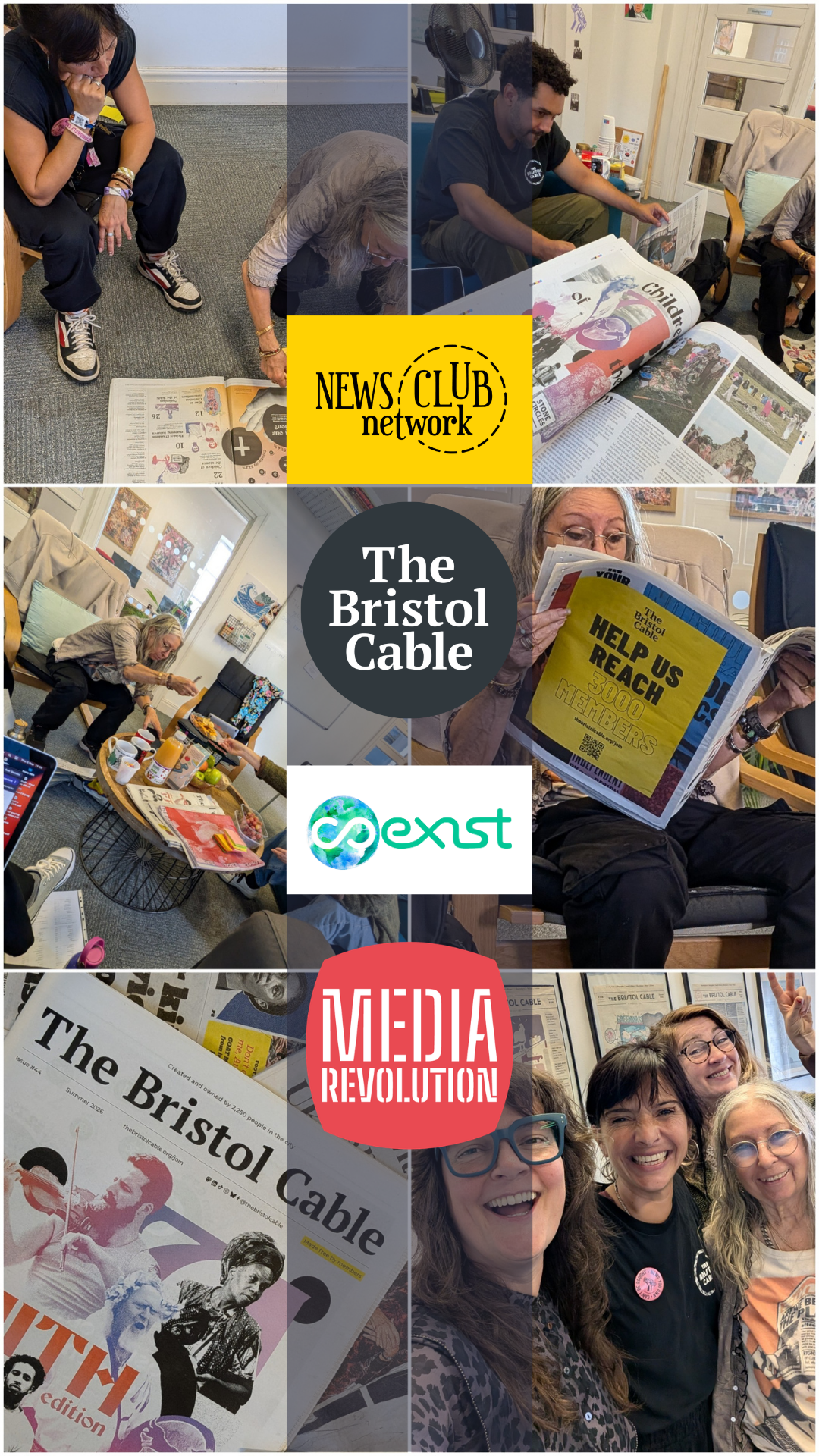
    I went to a ‘News Club’, organised by Media Revolution, Coexist and The Bristol Cable. Five people, four women, two journalists, four activists, one man. Good snacks. Great coffee (Aldi special apparently). A whiteboard and, sticky notelets, and a willingness to get stuck in to analysing and deconstructing the spoken, unspoken, implicit and explicit assumptions and messages in (fittingly) the Bristol Cable…and a big well-done to a very brave Adam Quereishi, the Cable journo who white knuckled his way through the dissection of his print baby.

    Other participants included Cable staffer and facilitator Begona, Bex, Community Connection and Engagement lead at Coexist CCBS, and Liz, co-founder of Media Revolution which has tasked itself with challenging toxic corporate media so that we can all have a shot at learning the truth and making the world a better place to live in. And enjoy ourselves and even have fun at the same time while we’re at it.

    So how will groups of people flicking through a publication and chatting about it help to spiritually cleanse toxic media and help us to undo the ‘menticide’ (deliberately false and divisive propaganda designed to keep vested interests in power) we are subjected to hundreds of times every day?

    Liz, co-founder of Media Revolution explains. “We feel baffled and overwhelmed by trying to keep up with the news and figure out what’s accurate and what’s not. So coming together in a news club, talking with real people in person is a game changer!  It’s so refreshing to break out of our little algorithm bubbles. Talking in person with people instead of endlessly scrolling rage-bait and comments from fake social media accounts designed to rot our brains…”

    Liz, who in a previous life ran her own design and marketing agency, then spent time coordinating with Extinction Rebellion, decided to dedicate herself to Media Revolution, because “it feels like every change we need to see in the world is stuck behind a broken information system deliberately designed to scare and confuse us.”

    “I love that no two news clubs are the same. You always learn something new.  Hearing what someone experiences when they read something is eye-opening. You get a real feeling of connection”.

    One of the surprising things I learned was when Bex shared her reason for coming to the news club. 

    “I got involved with Media Revolution on the back of breakdown in the relationship with a close family member due to far-right radicalisation. I never saw it coming. Then I went to the  Media Democracy festival this year and it made me realise that we are all victims of the divide and conquer exploitation of mainstream media. We’re manipulated so that our own internalised oppressions – sexism, racism, ageism, whatever – are being used to brainwash and divide us.  it’s called menticide and was used in Nazi Germany to turn people against their neighbours.

    “I love that News Clubs bring people into community and connection and that Media Revolution give so much respect to everyone.  There’s a humility and understanding that this is a systemic issue. It’s not about taking sides, but enabling people to choose what they think and feel from an empowered place, rather than fear and manipulation.”

    As Bex shared about her family breakdown I recalled something that happened to a close activist friend. They had a close and supportive relationship with their family, including supporting them through a time of activism-related incarceration, only to realise recently that their family member had been radicalised by anti-immigrant /refugee rhetoric, forcing them to cut ties. The pain that both they and Bex shared was very real.

    The news club uses a simple ‘CAPE‘ format to analyse content:  Content. Accuracy. Politics. Emotions. They use active listening and have an ‘empty chair’ awareness to include all voices and species who may not be in the room. 

    Begona, from the Bristol Cable, facilitated with a light touch, ensuring we all felt heard. “I’m tired of having conversations with people who think like me! We hope that they will highlight the role of independent media as a catalyst for civic participation. The Cable believes that journalism shouldn’t stop at identifying problems. We want to help create the conditions for solutions, bringing people together, connecting different narratives and creating opportunities for shared action.”

    So that’s why I’m excited. 

    People sitting around discussing news, meaning, media manipulation and how to change the world while drinking coffee and snacking…If this sounds like a plan, keep an eye open for a Media Revolution news club happening near you.

    You know it makes sense…

    In the meantime, as the saying goes, stay cool, hang loose, admit nothing.
    THE NEXT BRISTOL NEWS CLUB:

  • SHORT CIRCUIT AI – SWITZERLAND PROTEST CAMP

    SHORT CIRCUIT AI – SWITZERLAND PROTEST CAMP

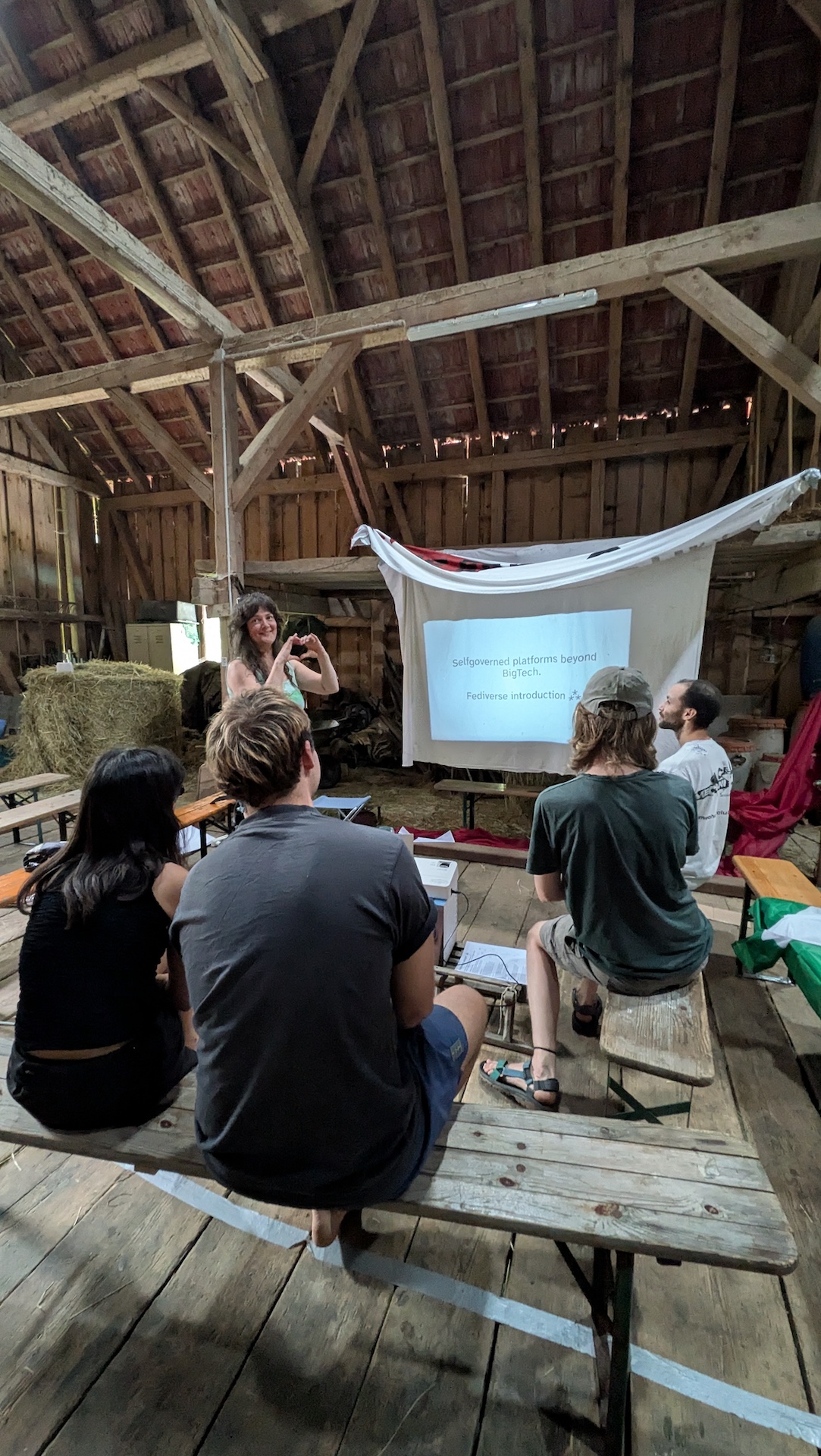
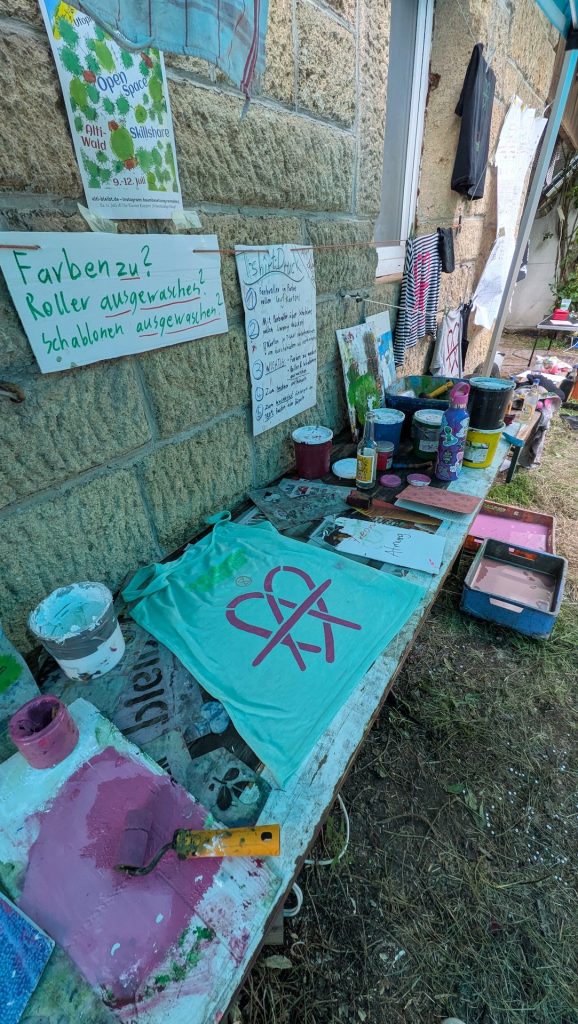
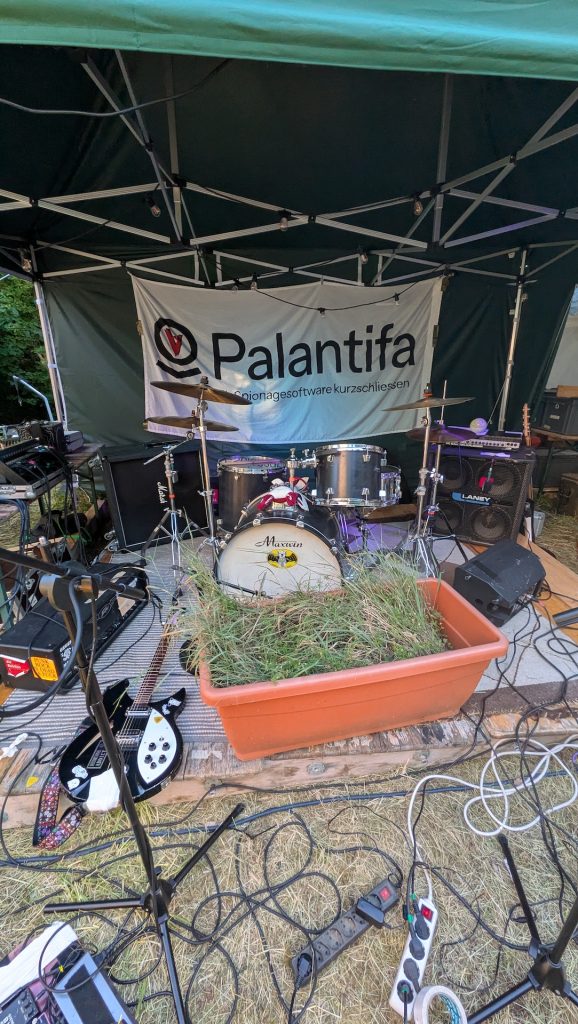
    The “KI kurzschliessen” – AI Short-Circuit Protest Camp – was organised by Aufstaende der Allmende (Uprising of the Commons) to take place in the Schaffhausen region in Switzerland – a hot spot of the ongoing massive expansion of AI infrastructure, such as data centres. 

    “Switzerland is seeing a growing number of data centers being built. Precise figures are unavailable, but estimates suggest there are around 120 data centers”. https://www.20min.ch/story/aufstaende-der-allmende-schweizer-ki-gegner-veranstalten-protestcamp-gegen-datenzentren-103594934 

    On day two of the camp, according to organisers, “a massive violent attack by the police” meant the camp was dismantled and relocated to neighbouring Germany, close to the Swiss border in Tengen. 

    “We are a grassroots democratic and revolutionary organization from German-speaking Switzerland. We have a tactical focus on direct action against the organization, logistics and infrastructure of the ruling class on the one hand– and the other, solidarity-based forms of organization. On the other hand, we want to contribute our part to the global social revolutionary movement against capitalism and colonialism –because the Earth and the lives of all of us depend on it.” their website states.

    The group first appeared in 2025 when they planted a construction site on a motorway and occupied a forest in Bern to protest against a road project, and are now turning their attention to AI.

    On one hand, the “AI situation” may seem complicated. 

    This ‘tech’ appears to save time, help with medical research, and makes mundane admin tasks simple and fast. It never gets tired, it will chunter away at your least-favourite work with a friendly (if sycophantic) demeanour, and is always ready to help, a new sort of confident at your fingertips. 

    It is being hailed as the industrial revolution 4.0.

    But on the other hand, there’s a pretty long list of nightmarishly unethical issues. 

    Including, but not limited to, the evidence that AI:

    1. Makes users more stupid, with cognitive offloading
    2. Induces AI psychosis
    3. Replaces humans in the workplace
    4. Falsifies information – generates fake pictures and hallucinated news –
    5. Creates ‘Phantom case law’ in legal cases 
    6. Changes who controls knowledge itself – (including plans to sell it  back to us)
    7. Fakes medical information 
    8. Operates autonomous weapons such as Ai drones which kill civilians, in direct contradiction to the Geneva convention
    9. Provides suicide advice to teenagers 
    10. Weaponizes surveillance technology to influence behavior at scale

    But perhaps the clearest issue is the devastating impact on the planet. 

    The runaway data centre construction – using vast swathes of land, polluting the air, and guzzling up water and energy – https://www.lse.ac.uk/granthaminstitute/explainers/what-direct-risks-does-ai-pose-to-the-climate-and-environment/  is simple to understand. 

    Our planet – and we – simply cannot afford it.

    Our resources are scarce and we need to treat them as such, not squander them on computational ‘conveniences’. 

    The hypernormalisation of AI and AI hype in the media means that not only are the key facts about the damage of AI being ignored, AI itself is also polluting the media landscape.

    After sucking up all of the known knowledge created by humans (without a care for intellectual property) – and rewriting news article headlines by  journalists along the way – it then degrades the information on the internet with dangerous inaccuracies disinformation and AI slop – making the media landscape even harder to navigate, let alone trust. And worse, it algorithmically boosts more billionaire bullshit.

    When we say ‘Media’ in Media Revolution we include AI in the ‘media’. From the legacy of the printed press, through to the addictive design of social media and now to the algorithms of destruction and AI; these battles are not separate. They centre around brainwashing by billionaires – otherwise known as menticide. The menticide to judge each other and ourselves, consume as if there’s no limits, disconnect and divide.  

    Media Revolution was invited to hold a workshop as part of the camp, focusing on responses to the media & AI enshittification. Travelling by rail and bus, co-founder Liz Pendleton made the journey and spent two days in the camp. 

    “The solidarity, care and connection was incredible. Daily plenaries were held to share out the tasks of running the camp, such as cooking the vegan food and running the workshops and talks – it ran like a temporary community, something akin to the commons. Translation available for the various attendees from different parts of Europe, the organisation was excellent.” 

    “It’s clear that community connection is a real antidote to AI – the coordination and strengthening of bonds, including those with the UK where data centres of 800 acres are planned in biodiverse Devon, is essential. People power and disruptive tactics are essential for change on the scale and timescale we need it – as is a genuine Media Revolution.”  

    And there is a response, in fact there are hundreds.  The Media Revolution responses are all linked to the very critical sentiment of the Aufstaende der Allmende /ADA (Uprising of the Commons) camp. Activities include forming a network of News Clubs designed to increase media literacy and community connection, launching a media consumer union to coordinate boycotts against problematic publishers and platforms, growing Mo-Me the decentralised social network with no ads or algorithms – and the keystone activity, uniting movements to coordinate for a movement media together.

    Movement media is accurate, independent, well regulated, and seeks to inform the public on key matters which affect our lives, rather than the malignant media which seeks to distract and divide us. 

    However, pushback against AI is not limited solely to organised activism. According to a recent study by the Digital Futures Institute at King’s College London and Responsible AI UK, over 40% of adults surveyed in the UK intentionally restrict their AI usage in their daily lives. Around 52% believed that AI carried more risks than benefits.

    “I wish I could share more photos or videos of the camp” said Liz, “or describe the deep sense of respect, love and care I felt from people there. But understandably a ‘no photos of people’ rule was in place to protect the anonymity of attendees.” 

    “However,  what I can say for sure is that spending time together, camped by a stream in a forest, seeking protection of our beautiful planet and each other, has furthered the deep connections between resistance collectives in Europe and the UK. We’re stronger and have more potential now.  I’d like to thank Aufstaende der Allmende for the invitation. I’m looking forward to working together and making plans towards Media Liberation Day on November 5th with the many different groups and collectives connected to the camp.”  

  • Finding The ‘Sweet Spot’ Between Investigation and Activism

    Finding The ‘Sweet Spot’ Between Investigation and Activism

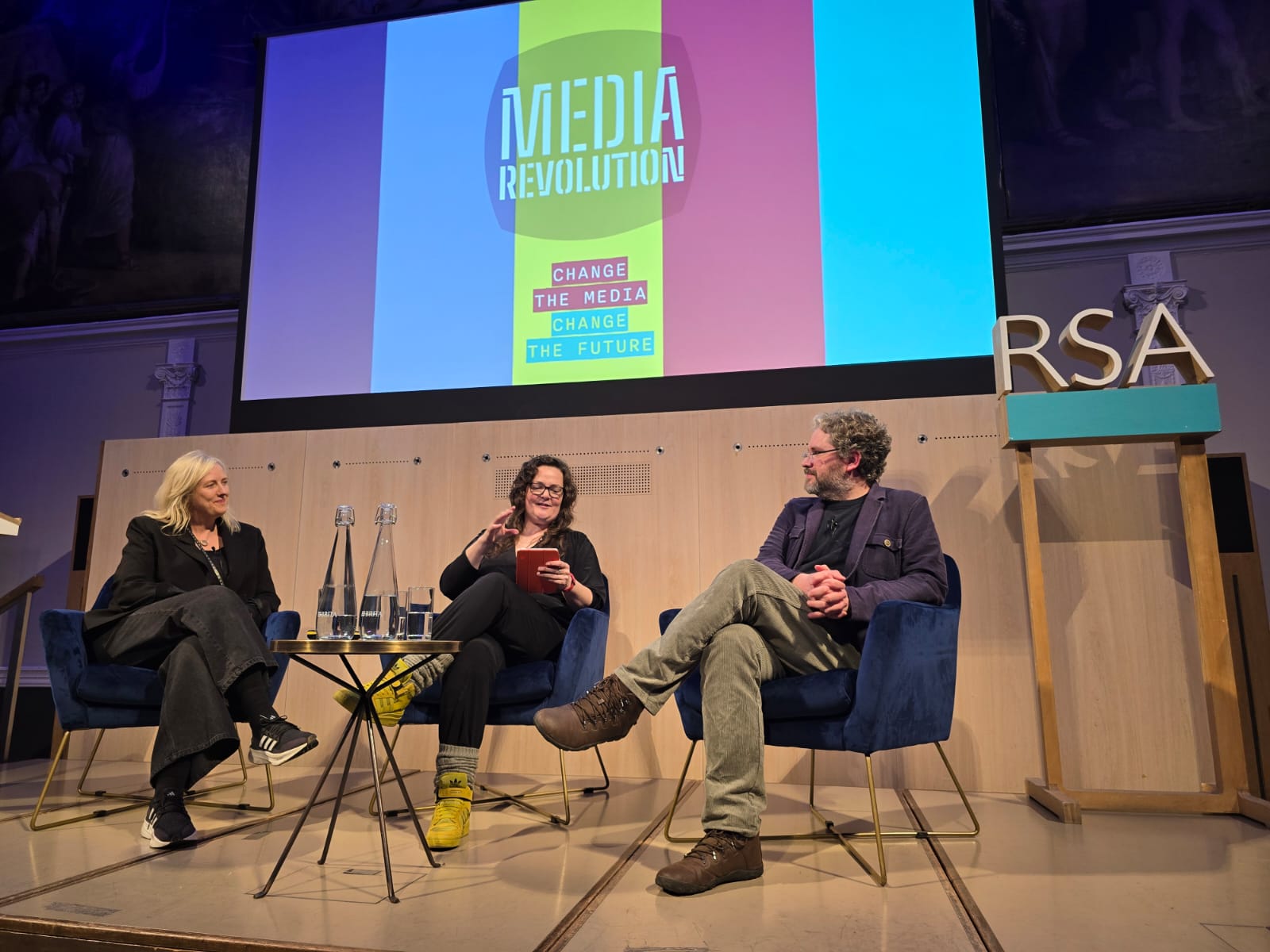
    At Media Revolution’s public ‘Disinformation and Democracy’ event at the Royal Society of Arts (RSA) in London, two legends of investigative journalism shared their insights into the omnicrisis and their views on the way forward.

    Carole Cadwalladr is best known for exposing the Facebook-Cambridge Analytica scandal of illegal data harvesting and election interference, and for her continuing investigations into the powerful machinations of US tech bros and their UK co-conspirators.

    Eliot Higgins is the founder of Bellingcat, which uses open-source investigation to produce actionable intelligence on issues of public concern all over the world, revealing massive cover-ups and corruption by governments and state powers.

    The hour-long debate on Thursday, February 26,, chaired by Media Revolution co-founder Liz Pendleton in front of a full house, could only scratch the surface of a complex mesh of issues. But it did demonstrate that Media Revolution’s work is motivated by the same principles as those of our two speakers: the need to combat multiple threats to democracy and humanity. Many of Media Revolution’s ongoing activities align with Bellingcat’s roadmap for ‘bending the arc of history back towards truth, participation and justice’.

    The Omnicrisis

    This is an era of what Carole Cadwalladr described as ‘total information collapse’ in which the mainstream news media are failing to present a narrative that makes sense to people. She talked about ‘performative accountability’ in which, even when wrongdoing is reported and inquiries are held, nothing actually changes. The lack of any real action against Facebook in the wake of Carole’s internationally-reported investigations is a case in point.

    She and Eliot Higgins both recognise that the public distrust of institutions is often justified by people’s personal experience –and that by association, many see the ‘legacy’ media as part of the problem. Naturally, people have turned to online content creators who, Carole said, “are humanising what’s happening and filtering it through their own personalities” – appearing relatable, credible and trustworthy.

    But we know social media is a minefield for information – as summed up by Bellingcat:

    Bellingcat summarises the challenge ahead as: “This is not just about fighting disinformation, it’s about reconstructing the systems, values and capacities through which people can reason, act and hold power to account – the conditions for a living democracy”.

    Its ‘Arc framework’ for achieving this is grounded in the principles of verification (collective commitment to truth and evidence), deliberation (collective reasoning to solve problems and guide action), and accountability.

    The framework comprises eight separate but inter-related ‘tracks for democratic renewal’, including education, civic empowerment, the rebuilding of shared values, and actions to restore evidence-based accountability to systems of governance.

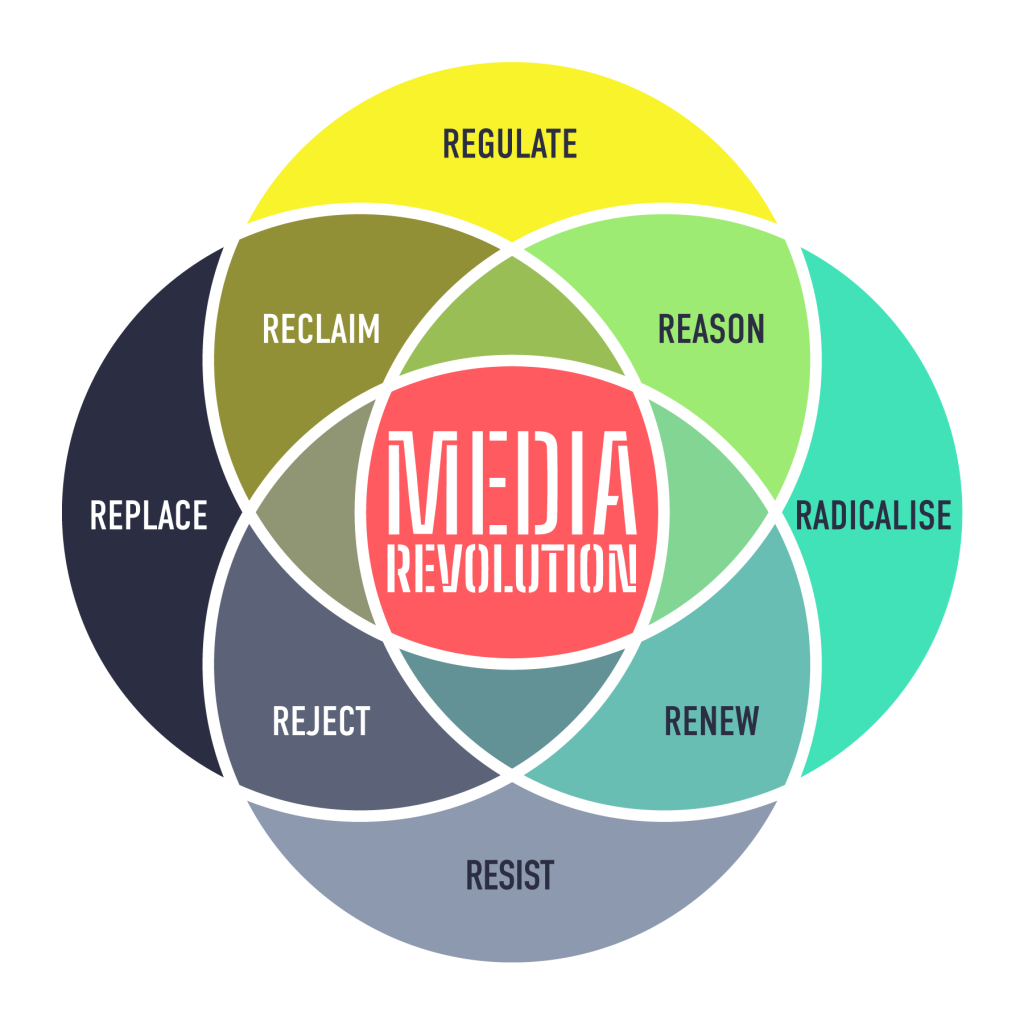
    Spot the similarities with Media Revolution’s intersectional Venn diagram, in which the eight areas of activity each have a different focus, but represent a collaborative approach to multiple, inter-related issues.

    Empowerment through investigation

    Within Bellingcat’s framework, the process of investigation is an exercise that flexes and strengthens the democratic muscle. Alongside its own deep delves into institutional wrongdoing, Bellingcat is actively equipping organisations with the tools and knowledge to do this for themselves – often at grassroots level. This has included student-led investigations resulting in reforms to council transparency, and community organisations using their findings as evidence in campaigns to bring about change.

    Media Revolution recognises that access to reliable and accurate info is a human right intrinsic to democracy, and our work feeds into the same process. Media literacy activities including News Clubs empower people to become active, informed and critical consumers of news media rather than passive, overwhelmed recipients. They equip people to challenge disinformation and find sources of factual evidence to back up calls for action. 

    The creation of the media consumers’ union Touchpaper will do this on a larger scale, enabling the public to take collective action – including boycotts – against publishers and channels.

    On the issue of restoring values and trustworthiness to media organisations, Media Revolution is collaborating with Hacked Off, the media reform campaign, and the independent regulator Impress, to campaign for effective press regulation in the UK and real powers to hold owners and publishers to account. The lack of follow-up to the Leveson Inquiry into phone-hacking and other media malpractice was yet another missed (or evaded) opportunity for investigation to bring about change.

    Where do we go from here?

    Although there wasn’t time during the RSA event to explore the details of Bellingcat’s Arc framework, the debate did shine a light on the way ahead.

    The discussions confirmed that Media Revolution’s response to the information crisis tallies with Carole Cadwalladr’s experiences of deep-dive investigation – and our actions already align with Bellingcat’s plan of action. Media Revolution will continue to work with the  Bellingcat framework, and with any luck we’ll stage a follow-up event, either at the RSA or somewhere else to continue the conversation with the public.

    The  debate also highlighted the fact that, in today’s malfunctioning media and information system, the quest for verification, deliberation and accountability is a form of activism. Refusing to accept the defeatist line about a ‘post-truth era’, developing skills to root out evidence, and sharing those tools and resources widely so that hidden facts can become public knowledge – this is an expression of rebellion as well as an exercise in democracy.

    And finally ….

    As the discussion drew to a close, a pivot point was unwittingly provided by an aggressive, attention seeking heckler who interrupted Carole as she talked about her own values as a journalist. Rather than submitting a live question for debate, he shouted: “Activism isn’t objectivity, Carole,” and accused her of ‘inappropriate bias’.

    It’s significant that the heckler didn’t claim Carole’s investigations were flawed, or that their findings were inaccurate. And if he was suggesting that journalists shouldn’t be politically motivated, that would disqualify most national newspaper editors – not to mention their star columnists – from doing their jobs. Let’s not even start on GB News.

    In fact, the interruption was more redolent of online trolling – an ad hominem attack, which, if launched into a febrile social media debate, would fire up the algorithms and escalate into the usual frenzied hate-fest.

    At the RSA, though, it wasn’t going to land.

    Instead, Carole calmly explained: “Trust comes from transparency and accountability … my bias is towards the truth, and it is towards democracy, and it is towards democratic accountability, and all of my journalism is based on those fundamental principles.”

    It brought us neatly back to the mainstay of Bellingcat’s Arc framework: a commitment to verifiable evidence from clearly indicated sources, with the aim of increasing understanding, not performing, simulating or optimising an online audience.

    It was also a reminder that active resistance to corruption and disinformation must live up to the standards it’s campaigning for. Activism must remain transparent and accountable.

    ——

    Philippa Davies is an independent journalist, and part of the Core Working Group at Media Revolution.

    You can also read a ‘behind the scenes’ account of the event by event chair, Liz Pendleton, here.

  • Is this a tipping point for social media?

    Is this a tipping point for social media?

    Deliberately and knowingly causing harm to children – as a business model.

    It’s not a good look for the social media giants Meta and Google, who are currently on trial in the US over claims that they intentionally created ‘addiction machines’ to maximise their profits – ignoring warnings about the risks to young people’s wellbeing.

    The case is the first of dozens that have been filed against Meta in the US, holding the company responsible for a crisis in youth mental health.

    The pressure is stacking up, and it’s about time. In Europe, France, Denmark, Greece, Austria, and Portugal are moving towards a ban on social media access for children and young teenagers, following Australia’s landmark ban in December. Other countries, including the UK, are consulting on similar age restrictions.

    Spain’s proposals also include holding platform executives legally liable for failing to remove illegal content, and making it a criminal offence to manipulate algorithms and amplify harmful posts. 

    Prime Minister Pedro Sanchez said: “ We must speak clearly about the management of platforms such as X and the vision of figures like Elon Musk.

    Meanwhile, large numbers of X users have closed their accounts, after Elon Musk’s bizarre decision to incorporate non-consensual porn into his platform’s offerings.  A new YouGov survey across Germany, France, Spain, Italy, and Poland has found that 47% of Europeans would back banning X from the EU if it continues to breach EU rules.

    It’s all about the intention

    Social media companies have always ducked responsibility for user-generated content (UGC).

    But recent events have shifted the focus to what the owners of the platforms control themselves, and the decisions that they – willingly and knowingly – inflict upon their users.

    The issues that have drawn public attention in recent weeks are a very small part of the picture, but could this be  the crack that lets the light in?

    When you recognise that the incredible harm being done is not incidental but intentional, you can widen the focus, seeing the many other social media damages that can be traced straight back to the owners who control the platforms.

    For instance, amplifying posts pushing extremist political views, inciting violent hatred and shutting down rational discussion.

    Flooding the zone with AI-generated images and clickbait disinformation, as a deliberate distraction from what people can see around them in their real lives.

    Deliberately suppressing or misrepresenting the facts about the climate emergency, depriving people of the information they need to demand action.

    Using “cyborg” accounts, where a human controls the account but automation handles posting, liking, following, or replies. These are often used to exaggerate a  political groundswell or to boost specific individuals. For example, they were used to amplify right-wing extremist Nick Fuentes on X to the point that mainstream media treated him as a serious figure.

    There’s an agenda here, and it goes way beyond the damage to young people’s minds.

    Age restrictions are not the answer

    Media Revolution welcomes the high-profile debate about mental damage caused by social media platforms – and the dubious motives of their owners. It’s long overdue.

    But one thing is generally missing from the conversation: the fact that there are alternatives to X, Meta, Instagram, TikTok and the other big tech companies.

    Instead of simply putting an age limit on social media access – which helps a small group of users, but does nothing to protect others outside that age group – we can also take part in tech walkouts and guide people towards alternative platforms such as Mo-Me, which is not owned by any individual organisation, and isn’t built to prioritise addictive algorithms.

    News feeds on Mo-Me are provided by independent, regulated media organisations, and users choose which accounts and channels to follow. There are no adverts, and no profit-driven ‘pushing’ of content; it’s a safe space for people of any age who want to connect with others, receiving and sharing news and information.

    And if we’re talking about news….

    While social media is under scrutiny, this is an opportunity for governments to look at some of the most prominent and prolific sources of online disinformation: their own national newspapers and TV channels.

    At the moment, some of these newspapers and their social media channels are not only complicit in spreading hate speech and disinformation – they’re responsible.  If we’re going to talk about harms, and examine the motives of big-tech platform owners, we also need to focus on the powerful media magnates who push the same agenda.

    Let’s build on this momentum

    The US lawsuits piling up against the social media platforms, the moves towards age-restricted access and the backlash against Elon Musk’s Grokepdia and X have highlighted some of the issues that are central to Media Revolution’s work.

    This is a chance for the Media Revolution to continue growing, in momentum, in volunteers, allies and supporters. To show the bigger picture and build public awareness of what’s possible – what a Media Revolution – a collaboration of responses to the situation can truly achieve. 

    WHAT NEXT?

    Be part of a Media Revolution. Join for an upcoming event:

    Tuesday 24th Feb – Next News Clubs Zoom session

    Thursday 26th Feb – RSA – Disinformation & Democracy

    Join our Signal group – or sign up to the newsletter

  • National Emergency Briefing Puts Media at the Centre of the Climate Crisis and Demands a National Emergency Broadcast

    National Emergency Briefing Puts Media at the Centre of the Climate Crisis and Demands a National Emergency Broadcast

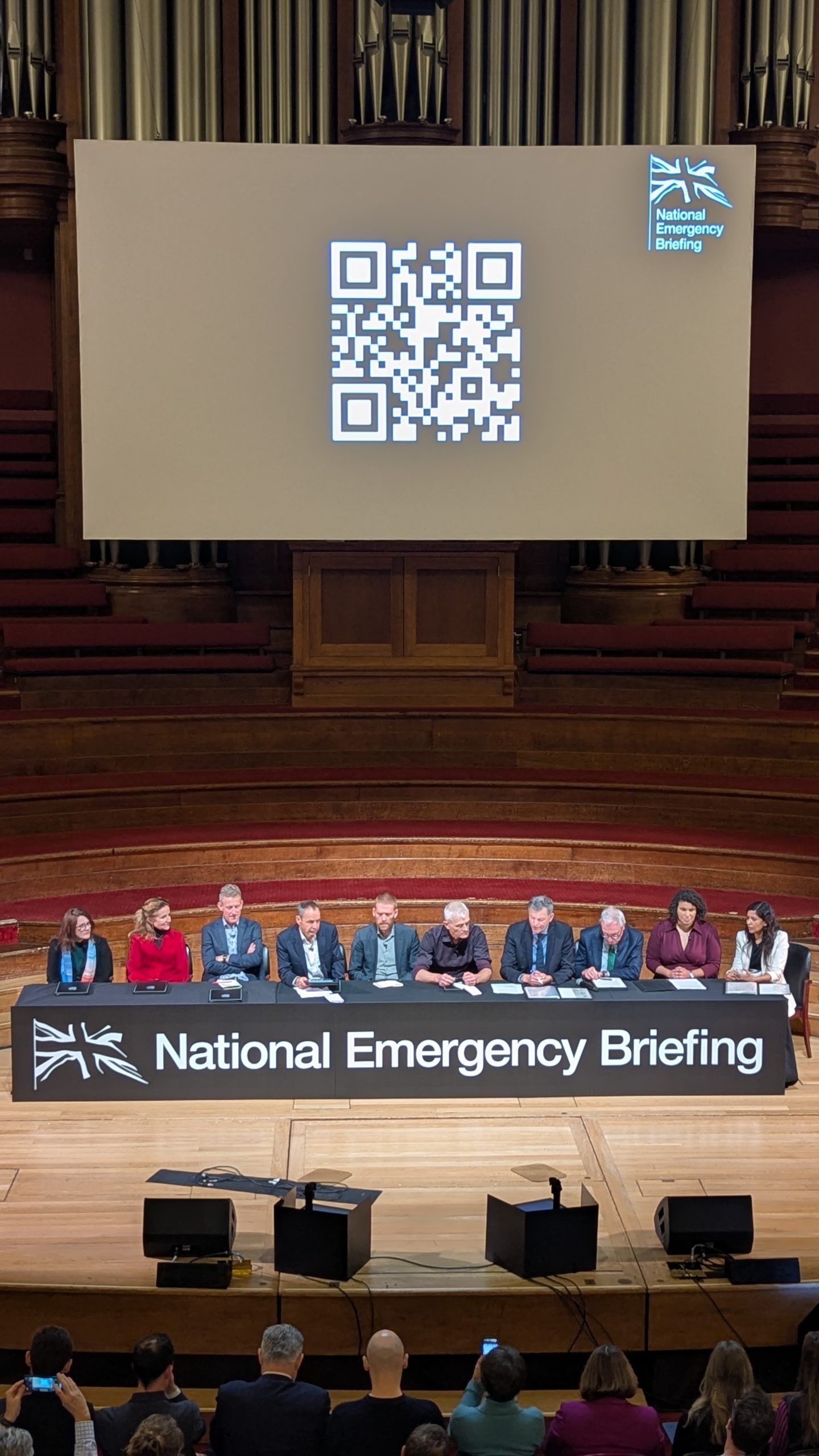
    Media Revolution welcomes the ‘Letter to Sir Keir Starmer and Media Heads’ released at yesterday’s National Emergency Briefing in Westminster. The briefing was attended by over 1,200 people including around 150 Parliamentarians, senior civil servants, business leaders, faith voices, cultural and sport figures, community leaders and over 80 MPs where a call for an emergency national broadcast was made. 

    The event on November 27 was billed as a climate conversation reset – and Media Revolution says the conversation must now go further.

    The latest scientific evidence shows that — like many other countries around the world — the UK must urgently prepare for a cascade of serious societal impacts. The accelerating climate and nature crises are set to make the UK increasingly unstable, with extreme weather, food shortages, economic shocks, infrastructure strain, and rising geopolitical risk. The briefing also made a new critical intervention. For the first time, leading scientists and public figures named the media as a central driver of the crisis — and an essential part of the response.

    “Our wider media is either far from independent, outwardly biased, or simply failing in its duty to explain to everyone the gravity of our predicament,” said Chris Packham, who opened the briefing and urged public support for a letter to Tim Davie (Director General of the BBC), Carolyn McCall (Chief Executive of ITV), Jonathan Allan (Channel 4), Sarah Rose (Channel 5), Geraint Evans (S4C), and Dame Melanie Dawes, (Chief Executive of broadcast regulator, Ofcom). 

    The letter to Prime Minister Sir Keir Starmer, the major broadcasters, and Ofcom warns:

    “We are deeply alarmed by the scale of fossil fuel–funded disinformation that has flooded Westminster and the media. 

    The lack of public access to accurate, science-based information has created a vacuum which has been filled by polarised headlines that deny and delay action.

    “Under the Communications Act 2003, all public service broadcasters must inform the public on major national and international issues. The UK has so far failed to meet these obligations.

    “We therefore ask the Government and all public service broadcasters to hold an urgent televised national emergency briefing for the public, and to run a comprehensive public engagement campaign so that everyone understands the profound risks this crisis poses to themselves and their families.”

    YES — broadcasters must act. Regulators must do better. AND — the media system as a whole must be transformed.

    The briefing centred on media responsibility firmly. But broadcasters are only one part of the system. The most influential media actors also include newspaper groups, disinformation-led channels such as GB News, and digital platforms whose algorithms frequently amplify polarisation, disinformation and delay.

    To protect the public — and to protect those in the majority world already suffering the worst impacts of crises driven by wealthy nations — the UK must use its privilege, resources, and democratic infrastructure to transform the media landscape with accuracy, not complacency. That requires all media institutions to meet the same high standards of responsibility.

    “If we want everyone to understand the risks we face, every media outlet must be required to provide accurate information. Many that were not present today regularly promote cynical disinformation about the climate and nature crises, contributing to years of delay and harm,” said Tom Hardy, Media Revolution core working group member, in attendance at the briefing.

    Liz Pendleton, co-founder of Media Revolution, who also attended the briefing, said: “Listening to three hours of climate science, setting out the bleakest of futures for the UK and the world, was harrowing. The media are failing in their responsibility to report on this — and every day that passes where they don’t sort it out makes the emergency worse. People have a right to this information so we can make informed choices, but the media are gatekeeping. As media consumers, we must unite to defend our rights — and we must take action.”

    Caspar Hughes, co-founder of Media Revolution, “Until we tackle the hugely powerful billionaire corporate media owners, the climate and nature crises will worsen, and our descent into fascism will accelerate. The short legacy we will leave our children is a rapidly destabilising and increasingly uninhabitable planet riddled with violent conflict. The first step to changing the future and giving our children a chance at a more peaceful future is to change the media.”

    Yesterday’s briefing represents a watershed moment — the point at which leading experts finally said openly that the UK cannot protect its people, or play its global role, while its media system continues to obstruct public understanding. Misrepresentation and manufactured division are not limited to climate: the same media ecosystem has fuelled support for escalating wars, polarisation of communities, mindless consumption, and contributed to widespread anxiety and depression.

    Other speakers at the briefing included: Professor Nathalie Seddon (nature crisis), Professor Hayley Fowler (extreme weather), Professor Hugh Montgomery OBE (health impacts), Lt General Richard Nugee CB CVO CBE (national security), and Angela Francis (economic transformation).

    It’s clear that the Government and broadcasters must now work together with absolute urgency. And this must be only the beginning of a wider effort to ensure the whole UK and global media system meets basic standards of accuracy and public protection for people and planet.

    You can support the call for an emergency broadcast by signing the public letter here:
    https://docs.google.com/forms/d/e/1FAIpQLScbdkcuPaw_Rz-CW8rqrXuBmLHMW5hNZ2juqpgjYsF_cxIXbg/viewform?pli=1

    And you can join Touch Paper – media consumer union here: touchpaper.media

    ENDS

    Media contacts:
    Liz Pendleton — Media Revolution — 07779341156
    Caspar Hughes — Media Revolution — 07747041596

  • Google & YouTube have Fishy Algorithms

    Google & YouTube have Fishy Algorithms

    Why are Google and YouTube scared of a hand-delivered letter?!

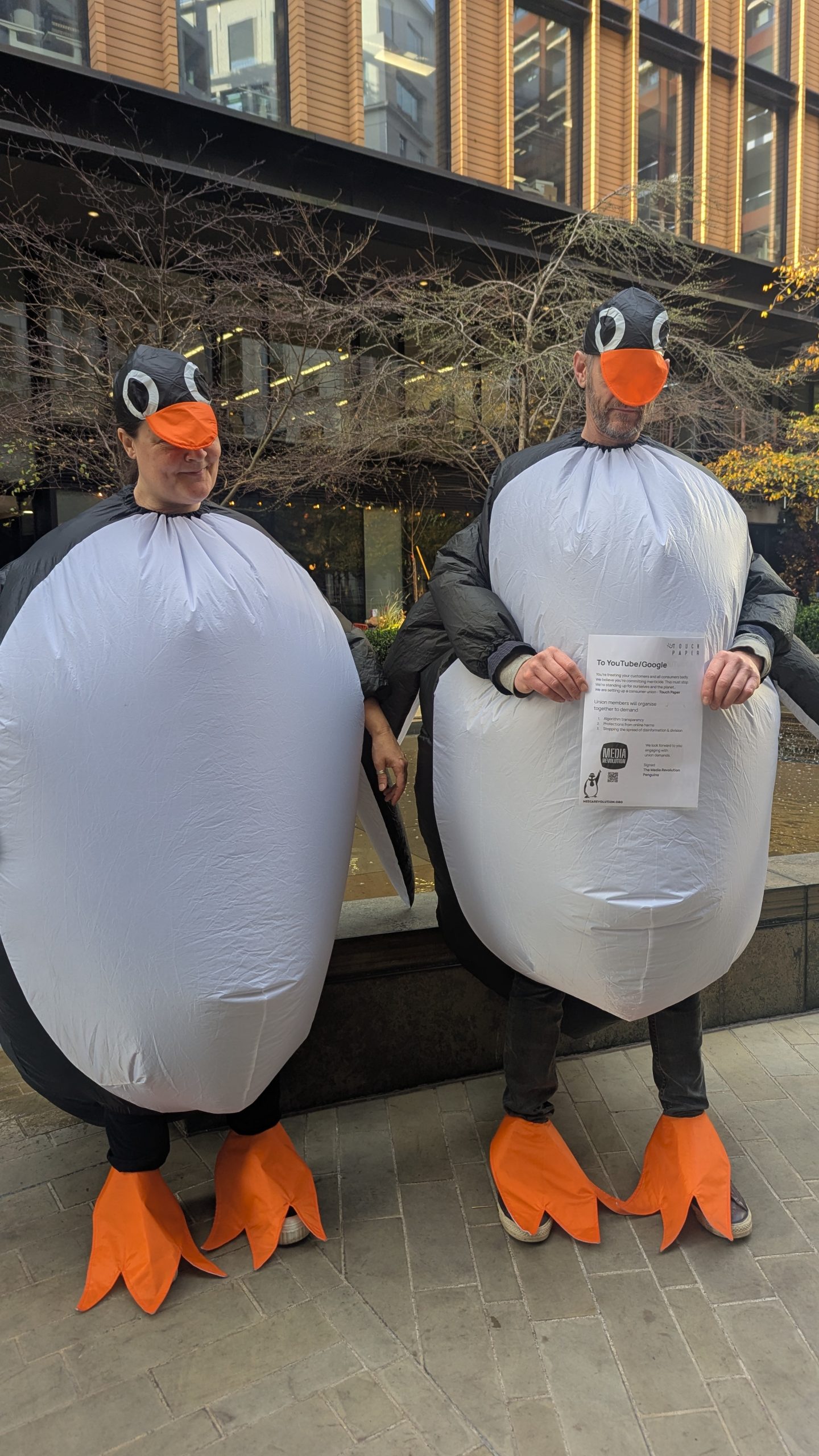
    Is it because they have fishy transparent algorithms? Because they don’t want people or penguins to realise they have the power to organise and demand better?!

    On #MediaLiberationDay – activists from #MediaRevolution visited YouTube and Google HQ to highlight they are harming media consumers by promoting #disinformation and #division – and to demand they be transparent about what content they promote and what content they hide as well as mark the beginning of a new media consumer union …. Touch Paper.

    The billionaire brainwashing is bonkers but we have the power to demand better. With a member-led consumer union, we can leverage the power of our attention economy – they improve or we go elsewhere. And yes, there are plenty of places to get your search results and videos these days.

    Media menticide is the root cause of so many problems around the world. A better world is possible, but it’s being hidden by fishy algorithms. Join at touchpaper.media

    POST LINKS

    Do us a favour and go like, comment, share and subscribe? Being on socials is

    YouTube

    BlueSky

    Instagram

    Twitter/X

    facebook

  • Cover Story

    Cover Story

    PRESS RELEASE (for distribution)

    For Immediate Release
    Date:
    7 November 2025

    Retail industry warns publishers as Media Revolution gathers pace

    London, UK – The retail trade press has issued a warning to publishers following the launch of Media Liberation Day, marking a shift in the balance of power between the public and the press.

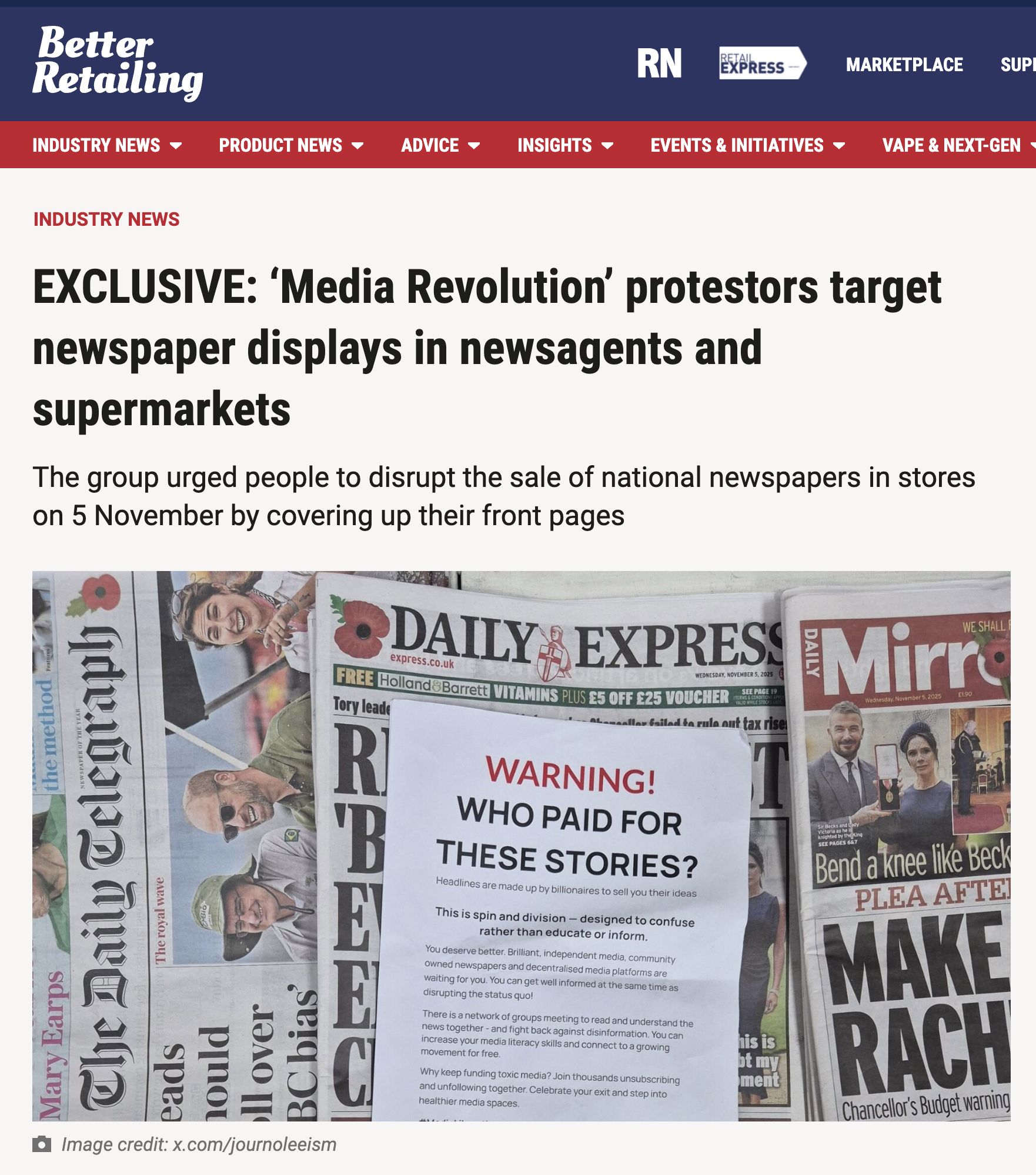
    According to Better Retailing, a message circulated to stores by publishers and trade groups advised retailers to “remove blockages” and “exercise extra vigilance to protect sales,” following nationwide actions where supporters placed alternative front pages over harmful media headlines. The coverage marks the first public acknowledgement by the news supply chain that the Media Revolution movement has begun to make its presence felt.

    “When the industry itself starts preparing, that’s a sign of real potential,” said Liz Pendleton, co-founder of Media Revolution. “The people have had enough of billionaire brainwashing and are starting to organise for change – and now the system knows it.”

    “Without first tackling the media systems, our responses to the genocide, political, social and climate crises will be far less effective,” said Caspar Hughes, co-founder of Media Revolution. “With the media on the side of the people, not their billionaire owners, we will reduce harm to people and planet in the coming decades.”

    An awakening within the system

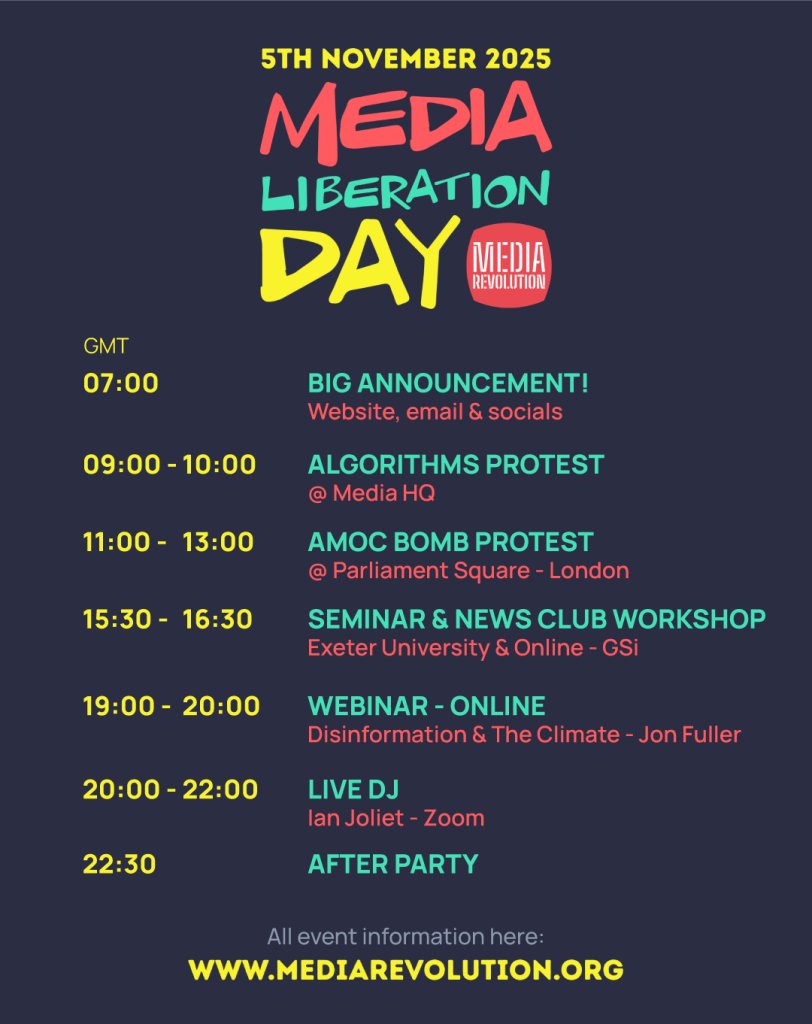
    Media Revolution — a growing alliance of independent journalists, technologists, activists and media reformers — launched the first Media Liberation Day on November 5th with coordinated actions across the UK. From inflatable penguin activists delivering letters to Google and YouTube demanding algorithmic transparency, to academic discussions at Exeter University on media accountability, the message was clear: the media status quo is no longer untouchable.

    Independent outlets such as Byline Times, The Prisma, and Bylines Network reported on the campaign, amplifying the movement’s central message that access to accurate information is a human right, and that disinformation and division are unacceptable and avoidable.

    With the retail supply chain acknowledging its reach, Media Revolution is entering a new phase — building a media consumer union to protect the public’s right to truth and transparency.

    “This is just the beginning,” added Pendleton. “The library of tactics — from ‘cover stories’ to collective boycotts organised by Touch Paper — will keep expanding until accountability and consent-based content consumption becomes the norm.”

    A growing global call for accountability

    The Media Revolution movement continues to grow internationally, with partnerships forming across Europe and grassroots groups joining forces to demand transparency from both legacy media and big tech. The goal: a democratic, accountable, and people-powered media system.

    For further information, interviews, or to join the movement, contact:
    📩 hello@mediarevolution.org

    See the Cover Story video on

    YouTube

    X/Twitter

    Instagram

    BlueSky

  • #ByeByeMenticide

    #ByeByeMenticide

    Happy Media Liberation Day! 🎉

    (also known as Guy Fawkes Day!)

    We’re saying #ByeByeMenticide 
    …and lighting the Touch Paper – a new media consumer union – incubated by Media Revolution.

    *Menticide is brainwashing. In this instance, billionaire media owner brainwashing. Enough is enough. We need to organise, unionise and change the media.

    Blow up this message! It’s an epic plot – and you can be involved.

    P.S. Why penguins? Read on!

    share on Instagram
    share on BlueSky
    share on X
    share on Mo-Me

  • Happy Media Liberation Day

    Happy Media Liberation Day

    Media Liberation Day is finally here, and the Media Revolution has begun.

    It’s time to celebrate support, achievements, actions and our continued commitment to collaborate, coordinate and remove the control of the billionaire owners corrupting our media system and build one that works in favour of people and planet!

    Change the Media – Change the Future.

    5 achievements for 5th November – and 5 ways for you to take part.

    1. UNITE!
      One of the most significant milestones of Media Liberation Day is the formation of a brand new Media Consumers Union.

      Research shows that consumer unions have driven higher standards for many of today’s consumables – including food, medicines and transport – but they are a forgotten and neglected tool, and up until now the rights of the media consumer have been overlooked.  Touch Paper  is set to become a powerful and influential organisation standing up for our right to accurate information and protection from disinformation and division. The union will be a collective force of members who challenge media outlets to do better. It will campaign for effective media regulation, and do so by deploying the power of resistance: public boycotts and digital divestment from the attention economy.

      Take part: Join the union here
    2.  NEW PLATFORM
      Media Revolution has worked with one of our supporters – Newsmast – a charity working in social media – to set up Mo-Me – a new news and social networking platform offering ‘consensual content’.

      Mo-Me – short for Movement Media – provides a free news feed from independent, well regulated media and grassroots campaigns, with no ads or algorithms. It’s built on the open web, so the software is shared – meaning it’s interconnected to millions of other users around the globe who are already working on better media – and there are no billionaire owners.

      Take part: Join Mo-Me here
    3. GET TOGETHER
      As well as challenging it at source, we’re improving media literacy for people and reducing social isolation through the creation of a network of News Clubs.

      People are getting together to analyse newspaper reports, TV news and social media posts, identifying manipulative content to ask ‘who’s behind this? And what do we do about it?

      Take part: Find out about News Clubs here
    4. SUPPORT THE SUPPORTERS
      We’ve brought together a coalition of diverse supporters from around the world:  independent media, campaign organisations and the tech sphere, who – up until now – have been fighting their own battles against the dominance of billionaire owners and influential lobby groups. We’re the start of a co-ordinated, collaborative response to the complex media problem: using the core responses of ‘replace, regulate, radicalise and resist’. 2026 will be a year to grow the supporter network further, and to work on the interconnectedness of our efforts.
      Take part: View the supporters and join as a supporter here
    5. TAKE ACTION
      The mobilisation of resistance and grassroots defiance is growing too; the Cover Story campaign has inspired people to hit back at toxic headlines, while the Media Revolution penguin activists have directly targeted UK newspaper and social media HQs to demand better.
      Take part – in cover story here

    All these activities are part of an active pushback against what the malignant media is doing to our minds –  menticide. 

    Very simply, it means that instead of our brains receiving and processing helpful content, the billionaires are brainwashing us. The confusion, unease and alienation we feel are deliberately induced. But they’re also a kind of immune response; a sign that something is wrong, triggering a defence mechanism we need to act upon.  

    So let’s keep working together – to challenge, remove or replace the billionaire owners who are corrupting our media systems and build alternatives together. 

    We’re so glad you’re with us on Media Liberation day and we’re hoping you’ll join us in saying #ByeByeMenticide

  • Why Penguins?

    Why Penguins?

    Media Revolution activists in penguin costumes at the Daily Mail HQ in London

    Penguins aren’t the most obvious symbol of resistance against media corruption – but they’ve become a powerful motif.

    The story of how this came about exemplifies the spirit and humour of protesters standing up against an authoritarian state.

    In May 2013 a wave of demonstrations, strikes and civil unrest flared up in Turkey, which all began when police used tear gas and water cannon to break up a peaceful sit-in opposing the redevelopment of Istanbul’s Gezi Park. 

    Over the next few days, anger at the disproportionate police violence  snowballed into large-scale protests against the government’s attacks on civil liberties. As well as a growing activist rebellion in Istanbul, there were marches and occupations in the capital, Ankara, and many other Turkish cities. News of the uprising was reported around the world.

    But on June 2, as the international broadcaster CNN screened live footage of police clashing with demonstrators in Istanbul,  its Turkish partner, CNN Turk, decided to broadcast a wildlife documentary about penguins instead.

    This was a bit of an own goal for the national TV station, as ‘Penguen’ was the name of a popular satirical magazine in Turkey, often penalised for poking fun at prime minister Erdogan.

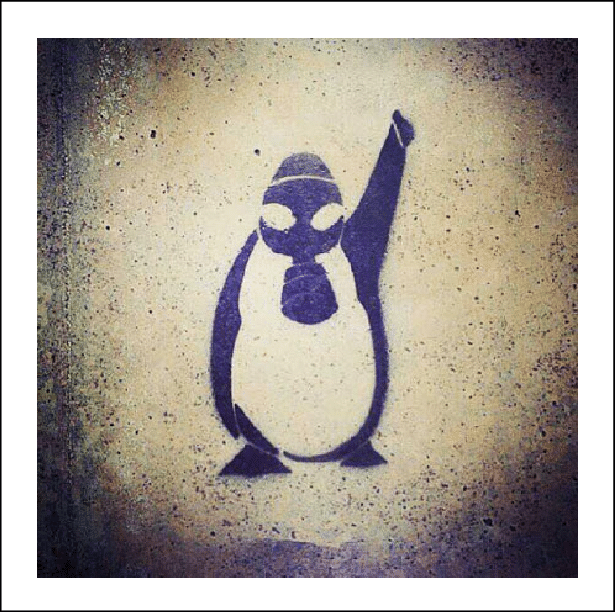
    The protest movement immediately picked up the penguin motif as an ironic visual emblem representing (and ridiculing) both media self-censorship and government influence over news coverage. Graffiti images of penguins in gas masks began appearing, penguin cartoons and memes went viral on social media,  and demonstrators started wearing penguin masks or T-shirts with the slogan ‘We are all penguins’. 

    Street art in Istanbul – stencilled graffiti of penguin wearing gas mask – image widely circulated on social media

    The news blackout also backfired, as everyone knew about the protests, and it was obvious that the TV, radio and most newspapers were deliberately ignoring them.  By failing to cover the anti-government uprising (which was everywhere on social media), Turkey’s mainstream press and broadcasters lost credibility and public trust – and spurred on more people to join the rebellion.

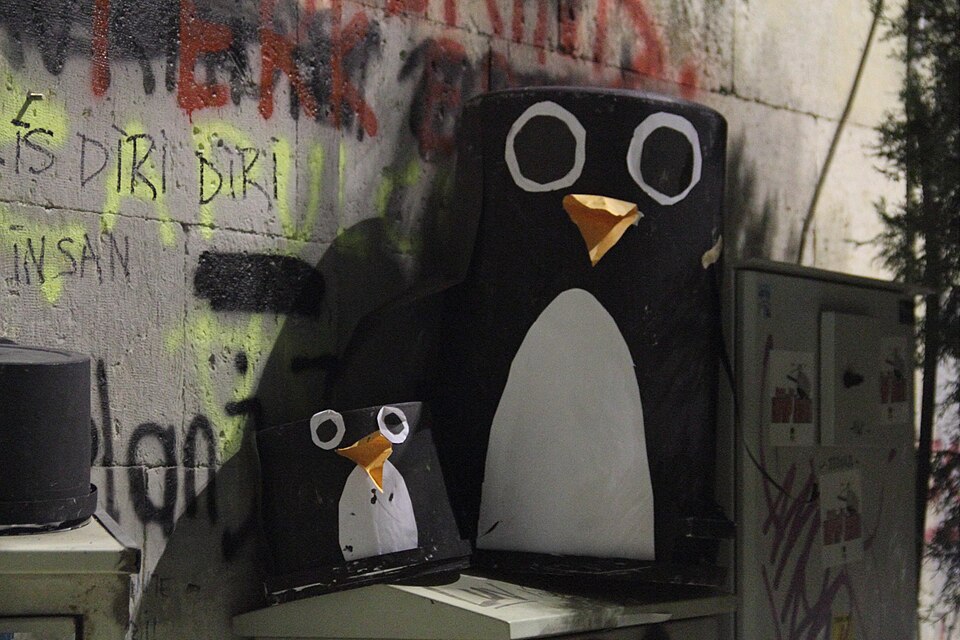
    Penguin effigies at Gezi Park, Istanbul, June 2013. Photo: Wikimedia Commons https://creativecommons.org/licenses/by-sa/2.0/deed.en

    Ever since the Gezi Park incident and its aftermath, the penguin has been a satirical symbol of government control over media coverage in Turkey. When TV and newspapers turn a blind eye to potentially damaging stories about the government, covering trivial or irrelevant news instead, this is known as ‘penguinisation’.

    And this is why Media Revolution activists have dressed up in penguin costumes for video stunts to mark Media Liberation Day and the beginning of a new Media Consumer Union – Touch Paper – and social network ‘Mo-Me’. Well, it’s also partly because penguins are distinctive, quirky, comical and also very cool. But mainly because the Turkish media cover-up over Gezi Park has so many equivalents in today’s global press, broadcast and online channels; the public are being routinely kept in the dark about vital information, lied to for political purposes, and distracted by PR froth,celebrity trivia and fake AI-generated propaganda masquerading as ‘news’.

    Media Revolution takes inspiration and impetus from the way the Turkish protesters seized upon that first incident of ‘penguinisation’, flipped the script and used it to ridicule the government-compliant media. They turned the penguin into a symbol of resistance and  resilience, representing the power of real news and communication when it’s freed from political spin and corporate influence.

    Today, we are all penguins.