Just Stop Oil was a highly effective nonviolent civil resistance campaign demanding that the UK government immediately halt all new oil, gas, and coal projects.
Known for bold, high-profile actions that forced the climate crisis into public consciousness, Just Stop Oil made sure the scale of the emergency could not be ignored.
Though they might have “hung up their high-vis,” they remain active in supporting court cases faced by activists, while staying deeply connected across the direct action space.
Their website calls out “Media shifting blame from their mates on mega yachts to the people in small boats”.
Their influence continues to ripple through movements and strategies for climate justice.
Just Stop Oil joined Media Revolution because the climate crisis is also a media crisis — too often downplayed, distorted, or ignored – and the activists who work tirelessly to raise awareness of this existential threat get treated as extremists by malignant media.
Just Stop Oil knows that without honest reporting, society cannot make the choices needed to secure a liveable future.
We thank Just Stop Oil for their support – and look forward to working with them for Media Liberation Day and beyond.
Since the phone hacking scandal first exposed systemic wrongdoing and corruption at the heart of Britain’s press and police, Hacked Off have been at the forefront of campaigning for a press that is both free and accountable.
Born out of the fight for justice for ordinary people whose private lives were violated — teachers, parents, children, as well as public figures — the campaign has become the leading voice for victims of press abuse.
Hacked Off continue to challenge press malpractice and lobby for reform, ensuring the Leveson recommendations are not forgotten and that new legislation delivers proper standards, independent regulation, and redress for those wronged. Their work is not about silencing the press, but protecting it from its own abuses — restoring the trust that journalism needs in order to serve democracy.
This mission takes on fresh urgency in autumn 2025, with ITV’s The Hack. Written by the team behind Mr Bates vs the Post Office and starring David Tennant and Robert Carlyle, the drama will shine a spotlight on the phone hacking scandal and the continuing cover-ups that have denied justice to victims. Just as Mr Bates transformed public awareness of the Post Office scandal, The Hack has the potential to reignite the national conversation about media corruption and the urgent need for reform.
Hacked Off joined Media Revolution because transforming the media is not just about exposing today’s failings in accurate reporting, silencing of marginalised voices or billionaire control — it is also about ensuring that ordinary people – and public figures elevated by the media and torn down the next – are never again left voiceless in the face of systemic abuse by the press itself.
Watch this space for their upcoming campaign – and sign up to their mailing list to keep up the fight for a better media.
Would silencing dissent succeed if the media refused to collude?
Around the world, people who stand up to injustice are silenced, criminalised, and branded as threats. It’s been happening for generations. Again and again, dissent is recast as extremism. Malignant media and governments co-script the narrative, portraying those in resistance to oppression as fringe criminals rather than citizens demanding change.
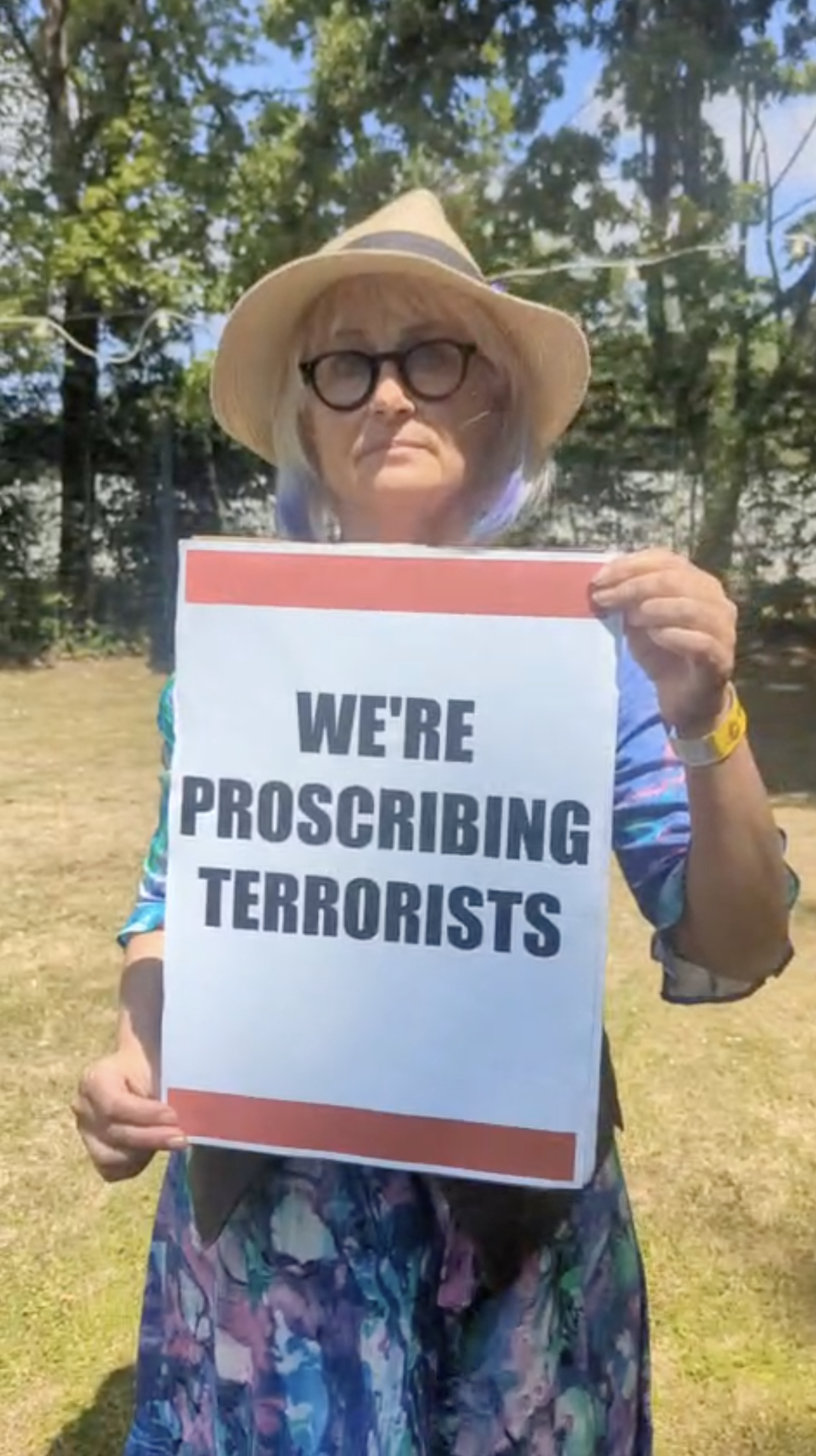
The UK government’s decision to proscribe Palestine Action as a terrorist organisation is another chapter in this long history. Since its proscription, over 1400 people have been arrested — some for nothing more than displaying a slogan on a T-shirt or placard of support.
The UN has called the move “disturbing” and disproportionate, warning that it is crushing political expression. Yet the press and government work together to brand activists as violent extremists instead of asking the obvious: why are those exposing the profiteering of war treated more harshly than those selling the weapons?
On Saturday, 7th Sept, 890 people were arrested during a peaceful protest in Parliament Square organised by Defend Our Juries. Witness statements and video evidence shows police intimidation and aggression towards bystanders and demonstrators alike.
However, the aggressive arrests were cynically reframed by the media as violence on the part of the protesters.
Independent media reporting on the ground contradicts that narrative. The Canary observed police “manhandling disabled older people“, with disproportionate force used despite the protesters’ peaceful sit-in. Officers were seen dragging away frail and elderly participants merely holding placards.
The same tactic is visible around the world. In 2024, Kenya’s Gen Z protesters filled the streets, chanting opposition to corruption and inequality. The government responded with abductions, torture, and over 60 killings, while newspapers called the protesters “rioters”.
In Senegal, security forces opened fire on political demonstrators and arrested hundreds, with Amnesty demanding justice for thousands of victims of repression since 2021.
The 1989 Tiananmen Square protests saw pro-democracy demands echo through Beijing and 400 cities. Hundreds – possibly thousands – were killed when the state imposed martial law and unleashed troop violence. Independent and foreign reporting was shut down while state outlets recast the uprising as “riots.”
As student media organisations have urged: “Ethical journalism demands that we minimise harm”, calling on newsrooms to rethink anonymity, exposure, and takedown policies when survivors become targets.
Whether the cause is democracy, climate, or freedom from oppression, the pattern is strikingly similar: redefine dissent as a security threat, and the media will help justify the crackdown.
Yet history tells us that those once labelled terrorists are sometimes those who change the world for the better.
Years later, these struggles are now celebrated and seen as examples of how media suppression helps erase dissent from history – but only because the people and movements standing up for justice refused to accept the labels imposed on them at the time.
The lesson is clear: labelling peaceful dissenters as “terrorists” and “extremists” is a control tactic. When governments face resistance, they pretend public safety and public servants are at risk. They collude with the media to repeat that message without questioning its motive, so repression escalates unchecked.
But in the rare cases of the media changing its approach, reporting the truth and allowing readers to make up their own minds, public opinion shifts.
In 1970, at the height of the anti-Vietnam war protests across the US, National Guard troops shot dead four unarmed student protesters at the Kent State campus in Ohio. Until then, the local newspaper, the Akron Beacon Journal, had been reporting the protests as “riots,” echoing the official government angle. But the shootings prompted its editor to seek out the truth; to “get the facts right, even when there is chaos, violence and confusion.” The paper investigated the incident and published a 30,000 word report three weeks later, in which it said: “It is our responsibility as a newspaper to provide the information that allows public judgement to function”. Its report concluded that the students had done nothing that justified their deaths, and the guardsmen had fired without orders to do so. The paper was strongly criticised at the time, but later won a Pulitzer Prize — and was instrumental in changing public opinion and fuelling broader anti-war resistance.
Would today’s mass arrests and deportations of student protesters in the US be tolerated if coverage headlined their demands rather than dismissing them as extremists?
From Nairobi to Sydney, from Dakar to London, resistance is under attack. Protest is not a threat to national security. Civil disobedience is not extremism. Those who resist unjust and outdated laws are often standing on the right side of history.
Malignant media mislabels them terrorists. History shows they are dissenters. Dissent is the heartbeat of democracy.
The Missing Context: Empire, Exploitation, Land Grabs, Evictions
“That new life that I couldn’t see, because I was born into war and hadn’t known any other reality: I knew that it existed. And hanging onto that hope each day was a method for me to survive.” — Dr Waheed Arian, who escaped Afghanistan as a child and later rebuilt his life as a NHS A&E doctor in the UK.
People don’t become refugees by choice. Displaced people are forced out by war, persecution, or land theft carried out by states, corporations, and profiteers. Across the globe—from Argentina to Zambia – land grabs violently evict whole communities without protection or compensation.
Yet mainstream, malignant media narratives ignore these root causes.
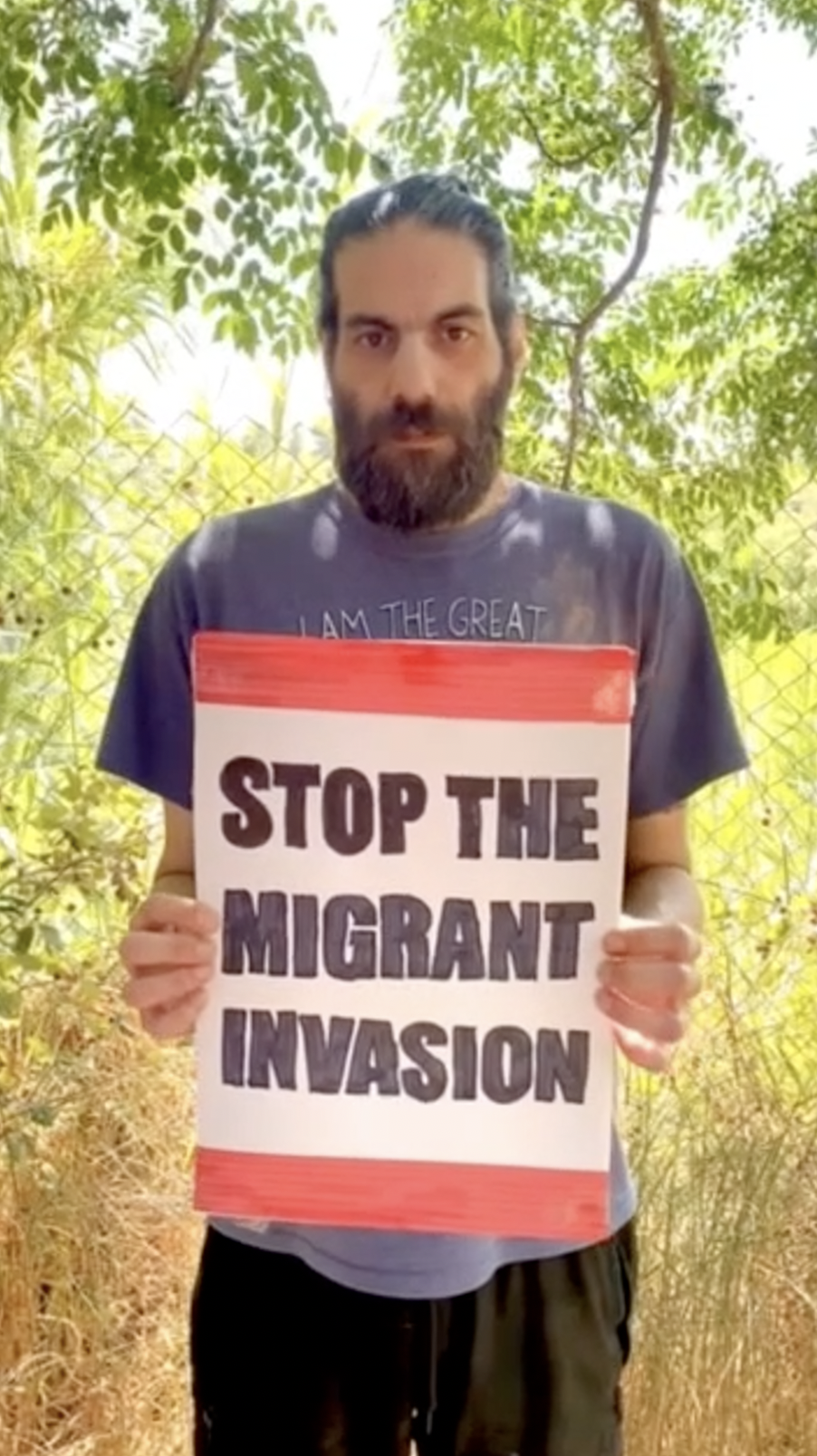
Instead, they caricature displaced people as invaders or burdens on society, sustaining the false idea that migration is a menace rather than a symptom of global injustice — in which media are complicit.
How Fear is Manufactured
Terms like “invasion,” or “swarm,” are used in order to reduce people to threats. This language doesn’t just stigmatise—it fuels violence. The Hope Not Hate report Stoking the Flames shows how hostile rhetoric drives far-right mobilisation, while research in Nature links media focus on immigration to rises in attacks against asylum seekers.
Displaced people rarely have a platform to tell their own stories. Stripped of voice, they are cast as opportunists or criminals. Not surprisingly, this breeds shame, alienation, and threats of violence.
As writer Elif Shafak reminds us: “History has shown that it doesn’t start with concentration camps or mass murder, or civil war or genocide. It always starts with words: stereotypes, cliches, tropes. The fight against dehumanisation, therefore, also needs to start with words. Stories. It is easier to make sweeping generalisations about others if we know close to nothing about them; if they remain an abstraction. To move forward, we need to reverse the process: start by rehumanising those who have been dehumanised. And for that we need the art of storytelling”
Change the Story, Change the Future
We believe first-person truths must lead reporting. Occasionally, media gets this right.
Like the story in the Guardian about Mohanad, a young Sudanese man forced to flee Darfur, described the moment he had to escape without warning:
“At 19, I had to flee my country, afraid for my life, without even saying goodbye to my family.” Smuggled across borders, kidnapped and tortured, he risked the sea crossing to Europe and was rescued by Médecins Sans Frontières. After years in asylum limbo, he now studies medicine and volunteers with the Refugee Council.
“Writing has given me a voice. It helps me process trauma, and it helps others in my community know they are not alone.”
Her reporting from Uganda’s Bidi Bidi settlement doesn’t just tell of horror, but of survival, solidarity, and hope.
These stories, and others like them show what becomes possible when displaced people have a platform in the media. Displaced people are no longer “swarms” or “burdens,” but survivors of injustice with hopes, skills, and futures.
When reporting turns its gaze upstream – to the profiteers, land grabs, and wars that drive people from their homes – the role of the media in manufacturing fear becomes clear. A revolution in media means dismantling disinformation, amplifying truth, and creating the platforms where silenced voices have space to be heard.
Change the media, and we change the world.
What can I do?
If you want to help shift the narrative, you could:
• Share this article directly with editors and ask: “Where are the migrant voices?”
• Share this on your social media, tag journalists and ask: “Have you invited a refugee to tell their own story?”
• Support the campaigns listed below.
Championing Change with Campaign Groups
International Rescue Committee (IRC) https://www.rescue.org/ Provides humanitarian aid, resettlement, and advocacy for refugees and displaced people in over 40 countries.
Refugees International https://www.refugeesinternational.org/ Independent advocacy organisation focused on lifesaving assistance, protection, and solutions for displaced people worldwide.
Together With Refugees https://togetherwithrefugees.org.uk/ UK coalition of 200+ refugee charities and trade unions pushing for fair and compassionate policies.
The African Refugee-Led Network (ARN) https://arn-network.org/ A coalition of refugee-led organisations (RLOs) that work to amplify the voices and advocate for the rights of refugees in Africa
#99Problems
This is just one of the #99Problems with the media.
This single placard and perspective cannot tell the full story of displacement — from Windrush to partition, from stolen Indigenous lands to modern-day refugee crises.
The truth is: every country is shaped by migration — sometimes chosen, too often forced.
There are more placards in this series. Stay tuned, get involved, and ask yourself: what’s missing?
We stand in unwavering solidarity with journalists everywhere who dare to uncover truth under fire—and we condemn, with full moral clarity, every attack against them.
Today Monday, August 25th, another tragic loss: five journalists—Hussam al-Masri (Reuters), Mohammed Salama (Al Jazeera), Mariam Abu Dagga (freelance with AP),Moaz Abu Taha and Ahmed Aziz — were killed in a double missile strike on Nasser Hospital in Khan Younis. Local health authorities confirm at least 19 civilians, including medical staff and first responders, were also killed in that airstrike.
EDIT: During the writing of this post reports came in that a sixth journalist, Palestinian correspondent Hassan Douhan, was killed in a separate attack in Khan Younis.
On 10 August 2025, Al Jazeera videographer Anas al-Sharif and four colleagues were killed in a targeted Israeli airstrike on a media tent outside Al-Shifa Hospital in Gaza City—a strike widely condemned by press freedom organisations as a premeditated assassination of journalists and defined under international law as an unacceptable violation of civilian safety.
Since 7 October 2023, Palestinian authorities estimate at least 217 journalists have been killed. Independent tallies vary—Wikipedia lists 238 names, while CPJ confirms 192, and the UN estimates 242. Whatever the precise figure, this remains the deadliest conflict for media workers in modern history: a mass killing of truth-tellers.
This is not just Gaza. It is happening everywhere—in Sudan, in the DR Congo, throughout all corners of the planet where brutal suppresses voices. The stories that could prevent the worst in human and planetary suffering are being buried.
As content creators, writers, and seekers of truth, we understand – and stand firm in solidarity and action against the pressure of speaking truth to power. We recognise the weight of secrecy, the fear of censorship, the cost of bearing witness. The forces that target journalists—the forces that work to silence—and the systems that swallow independent media are also at work in every digital echo chamber, every manipulated narrative, every distracted scroll.
The world may be waking up to a “livestreamed genocide.” But watching is not enough. Passive witnessing numbs us. We must go upstream: we must interrogate the systems, confront the silence, resource the under-reported. We must seek out independent journalists, amplify the suppressed stories, elevate truth to disrupt the racket of division and distraction that thrives on ignorance.
Our Commitment: Action, Not Just Words
Media Revolution commits:
To amplify the need for independent voices—in Gaza and around the world, wherever journalism is suppressed and journalists are being killed.
To support press freedom through solidarity campaigns and collaborative platforms.
To call out and dismantle propaganda machines creating division, protecting their power, their wealth, and operating with impunity.
To build an informed public that seeks truth, that honours the risks taken by journalists.
For every name—Anas, Hussam, Mohammed, Mariam, Moaz, Yahya, Hossam, Ismail—and all the brave souls killed while bringing the truth to the world—may their message live on through the stories they told and their legacy to the truth as murdered journalists.
We are not powerless: by choosing where we look, what we share, whose story we lift up, we become active defenders of journalism and justice.
Let this statement be more than words. Let it compel us—and those seeing it—to wake up, to seek light where it is most at risk of being extinguished, and to change ourselves, and our world, to one built on awareness, courage, and solidarity.
Further Reading & Campaigns
Committee to Protect Journalists (CPJ) – Ongoing documentation of journalist deaths in Gaza and global press freedom violations https://cpj.org/
International Federation of Journalists (IFJ) – Global campaigns for journalists’ rights and safety https://www.ifj.org/
Reporters Without Borders (RSF) – Press freedom rankings and advocacy https://rsf.org/en
Palestine Journalists’ Syndicate (PJS) – Representing journalists in Palestine, documenting violations and calling for accountability http://www.pjs.ps/
Media Revolution – Campaign to challenge disinformation systems, defend independent media, and build access to trusted information https://mediarevolution.org
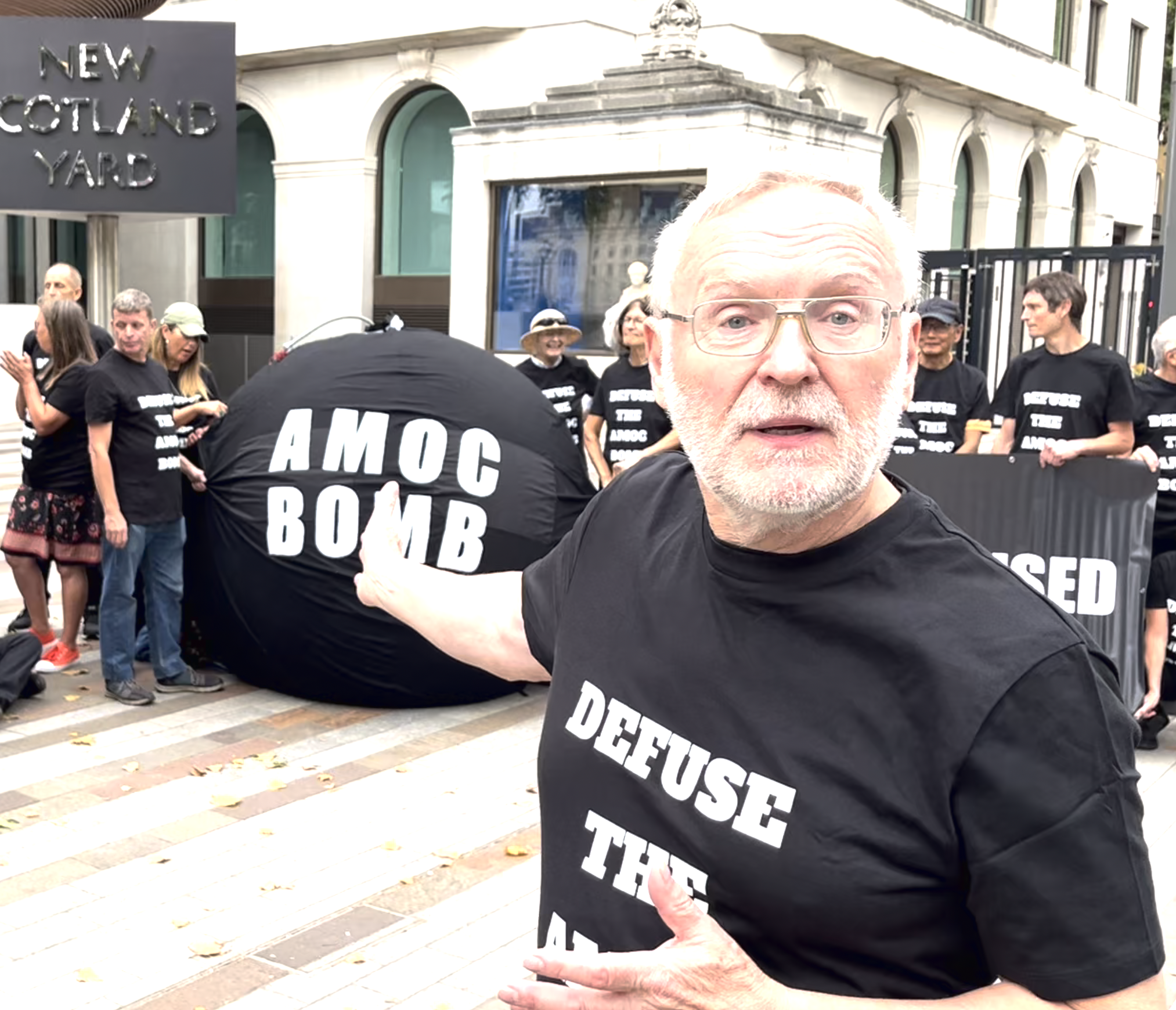
The AMOC: A Global Climate Tipping Point - another of the #99Problems that the media are ignoring.
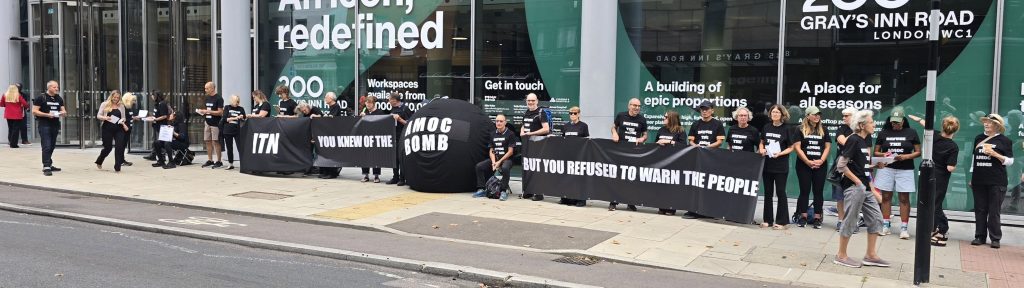
“Scientists are begging politicians worldwide to pay attention to the AMOC” – say climate protesters outside ITN and Scotland Yard in London, UK – 18th August.
The Atlantic Meridional Overturning Circulation might be a bit of a mouthful, but it seems that not talking about it could be like ignoring a huge ticking time bomb.
Simply put, the AMOC is an ocean current system that moves water north from the tropics to cool it down, before it flows back south again. It works hard to balance temperatures around the globe. From Europe – kept milder than neighbouring regions at similar latitudes – to monsoon rains in Africa and Asia, rainfall over the Amazon basin, and storm systems along the coasts of the Americas, the AMOC is critical to global temperature.
Without it, vast regions would experience dramatic temperature shifts. Northern and Western Europe could face winters as severe as Northern Canada.
West Africa would see weakened monsoons which would devastate food production. South America’s Amazon basin could face deeper droughts. The US east coast could be battered by stronger hurricanes and rapid sea-level rise.
AMOC collapse would mark a planetary climate tipping point. The colder, drier or stormier conditions would render huge areas of arable land completely unsuitable for cultivation, leading to global declines in agricultural output and triggering widespread food insecurity.
A University of Exeter study shows how even in one region, land suitable for farming in the UK could fall from 32% to just 7% under AMOC collapse:
While moderate global warming gets portrayed as beneficial — longer growing seasons here, milder winters there – even people celebrating that vineyards and oranges could be grown in traditionally cooler places — these are a day dream compared to the reality – the nightmare of an AMOC collapse. Model projections show Europe cooling by several degrees, rainfall falling sharply in critical agricultural belts, and entire monsoon systems destabilising.
Despite the gravity of this potentially imminent risk, appeals from the scientific community for urgent policy intervention have received only limited political response. Independent media coverage is available, but mainstream media are largely ignoring the AMOC completely.
The press must begin to do its job: to educate and inform the global public, empowering people everywhere to demand urgent action from their governments….and it doesn’t look like they’re going to, anytime soon.
Just another reason we need a Media Revolution.
Join the campaign for a transformation of the media system. 5th November 2025. Will you be part of it?
Protesters outside ITN – News producers in London.
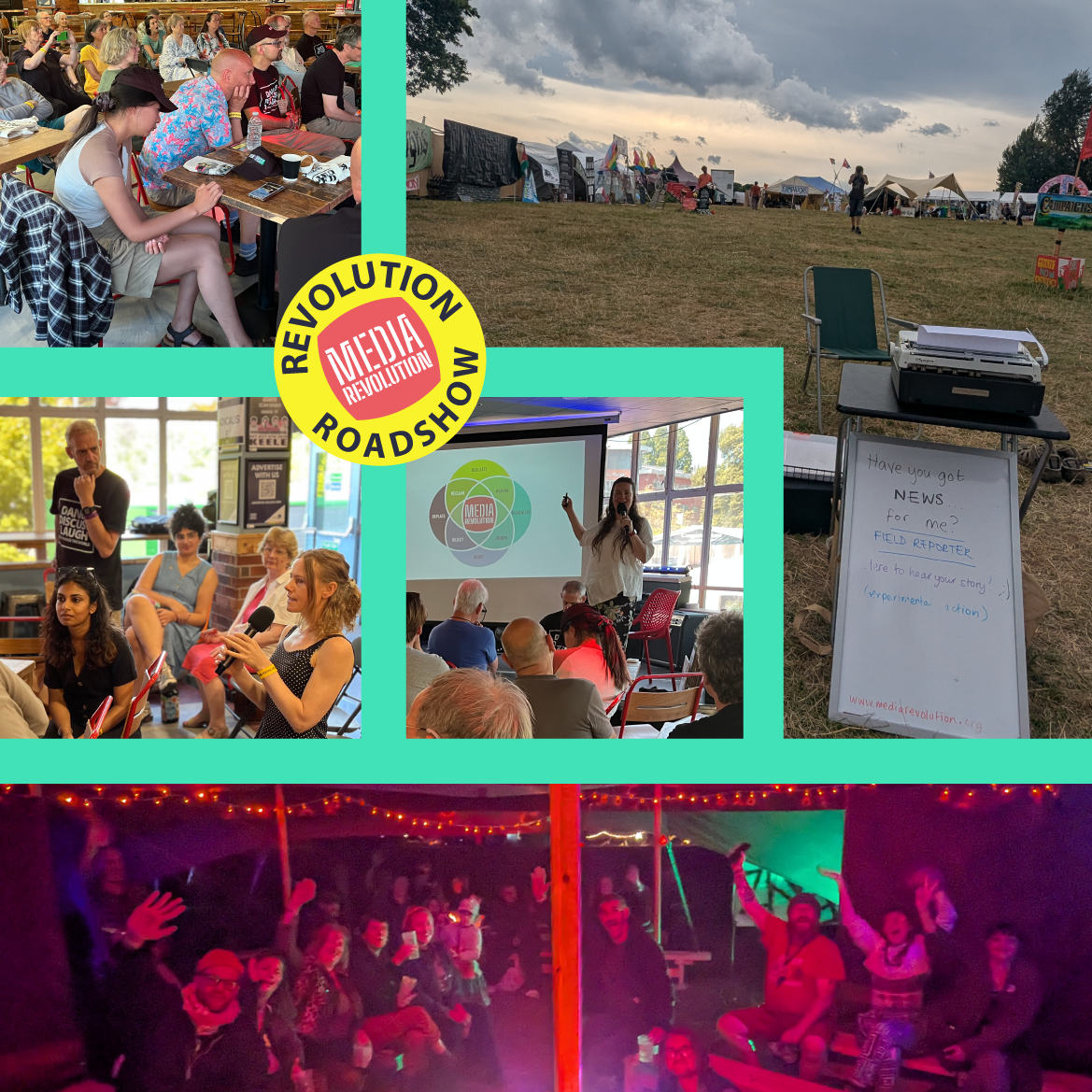
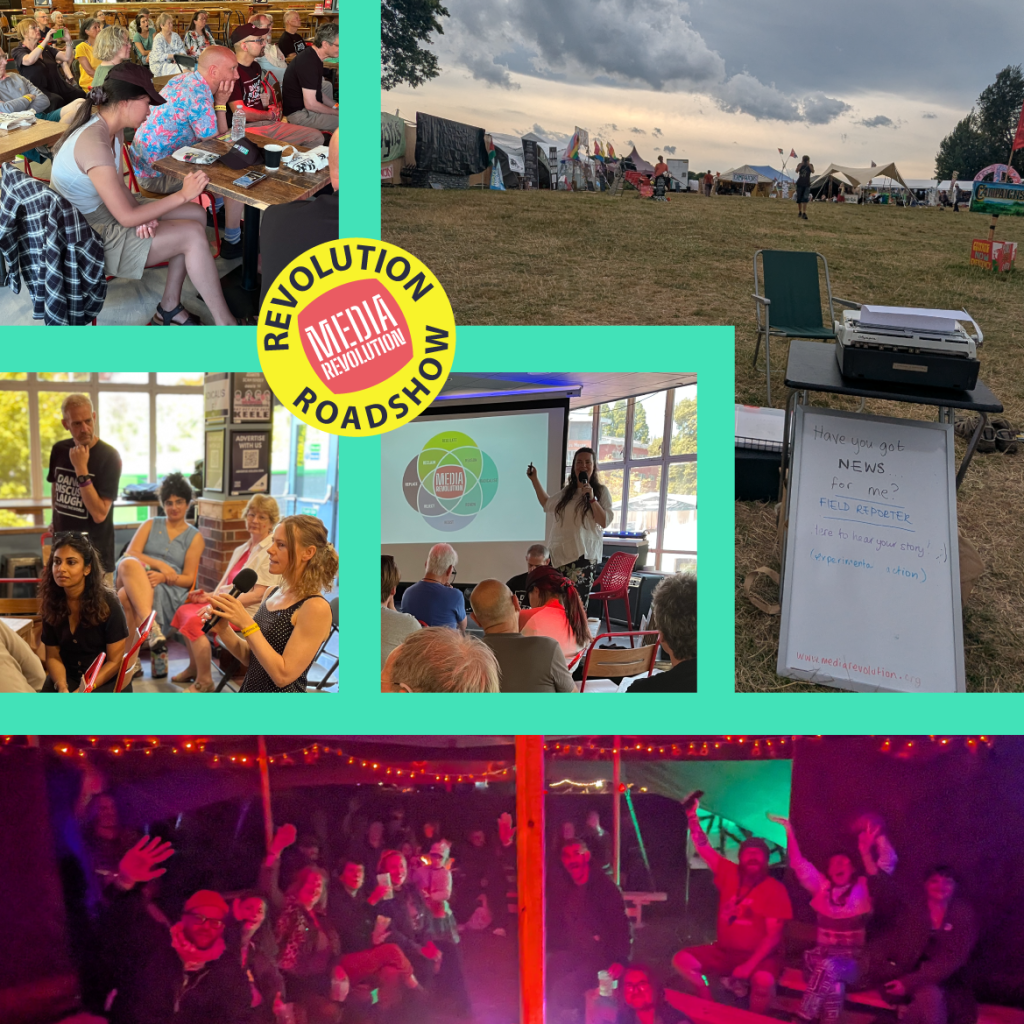
We’ve been hitting the road with the revolutionary news – popping up at festivals and events around the UK.
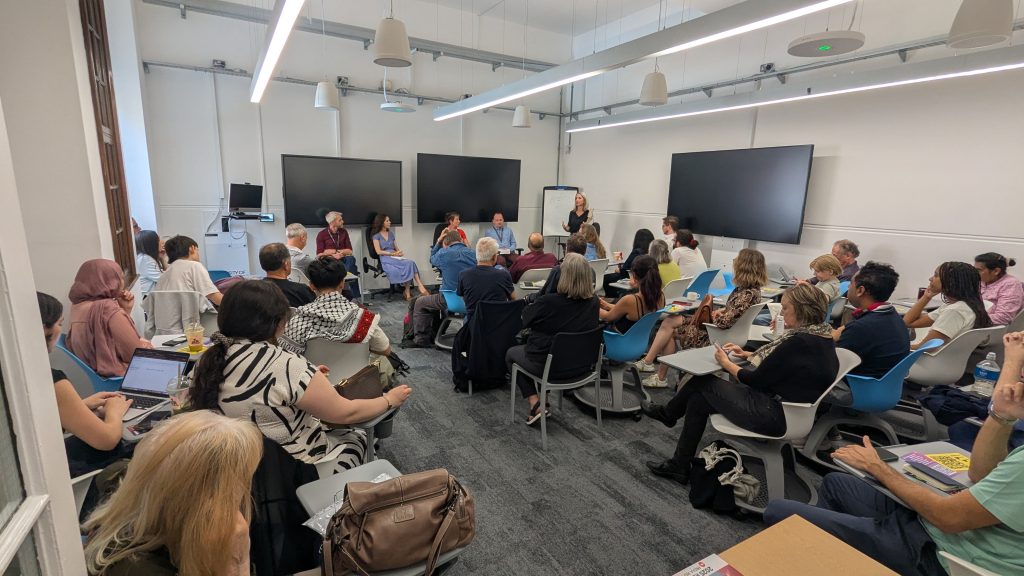
The summer tour kicked off with Caspar as a panellist and Liz as workshop host at the Media Democracy Festival at the University of Westminster, London, introducing the campaign to the crowd of attendees hosted by Media Reform Coalition.
With Tom and Rianka also on the crew, conversations centred around media corruption and control, and the Media Revolution theory was centred in the popular ‘How to Un-F**k the Media’ workshop. Between sessions, we even got chatting about the revolution with Green Party’s potential leader, Zack Polanski, at the water fountain! An inspiring start to our festival season, captured by Turn Left – members of the Independent Media Association in this brilliant video https://www.youtube.com/watch?v=VrpoqIRtbx4
Panel discussion at Media Democracy Festival, with Hardeep Matharu, Tom Chivers, Milica Pesic and Caspar Hughes
From there, the revolution roadshow rolled on to Byline Festival in Keele, with four members of the core team taking to the stage and hosting an interactive workshop for attendees to learn more about the coordinated collaboration plans for Media Liberation Day. We were honoured to be on the line up alongside brilliant speakers like inspirational author and professor Mike Berners Lee and the brilliant Kate Raworth from Doughnut Economics. We created a workshop session using ‘speed dating’ for people to engage in responses to the media’s problems, and explored how we can reshape our media landscape by working together in unexpected ways.
But we didn’t stop there. Next up was the Big Change Tent at Buddhafield Festival, because, apparently, talking about the intersection of media activism and mindfulness is a perfect match, and the talk attendees were all incredibly engaged – sticking around after the talk had finished to sign up to the email list (hello) and even offering to become volunteers!
And finally, at Green Gathering – the off-grid eco-focussed festival in Wales – Liz rolled out our vintage typewriter and took up the role of ‘field reporter’, creating a live festival news feed, littered with exaggerated disinformation as an interactive artistic intervention action! The headlines from ‘The End Times’ – (the made-up newspaper of the day) were then performed on stage later in the Campaigns field. The stunt event caught the attention of festival co-founder Steve Judd, who described the action as “exactly the kind of thing the festival was set up for”.
Media Revolution really can pop up anywhere—and we love surprising you all in the best ways.
So, there you have it. We’ve been on the move, meeting what feels like thousands of new revolutionaries along the way, a summer tour that has seen us flit from university halls to festival venues – always innovating and always finding new ways to connect.
As the summer season draws to a close, we’re not packing away the typewriter just yet – keep an eye out for it popping up in more unexpected places as we move into the Autumn, and ever closer towards Media Liberation Day and beyond!
If you have an event, festival, talk, panel, school or university or even a podcast, in person meeting or event-of-any-type that you would like Media Revolution to attend, whether that’s our base in the UK or further afield – please get in touch with us.
“News Club UK: a place to talk about the news and how to change it! Each week we’ll expose what’s wrong with the news media, but also how we can build a different media that empowers the public, rather than serve political elites and big business.
A place for unique analysis of the news, backed by arguments and ideas for changing the news media.
That’s why we started News Club: to critique and pull apart the news, and more importantly to discuss and celebrate the ways we can build a different, more democratic media system.
Be part of a community of people who share your interests.”
“We are a non-profit whose main objective is to stop Big Tech spying on us and monetising our personal data.
We do this by undermining the creepy business model they use: Surveillance Capitalism. And we do that by helping you move to using different tech that doesn’t support that business model.
Why? Because there is a dark side to Big Tech and surveillance capitalism, far worse than you imagined, and it is NOT worth the price you think you’re paying.”
“Rebel Tech Alliance can help you:
Learn – why Surveillance Capitalism and Big Tech are the root of so many problems, and how this came to be
Switch to Alternatives – we suggest alternative tech stacks, so you can change up to avoid Big Tech’s creepy surveillance
Trust – which businesses do not engage in the Surveillance Business Model, via the SMBzero certification
Unite – you’re not alone. There are many privacy orgs, and a huge number of individuals, who care about privacy and democracy. Collectively we can get things done”
Ask yourself this. Would genocide be happening in the first place if malignant media weren’t influencing politics and broadcasting hatred and division?
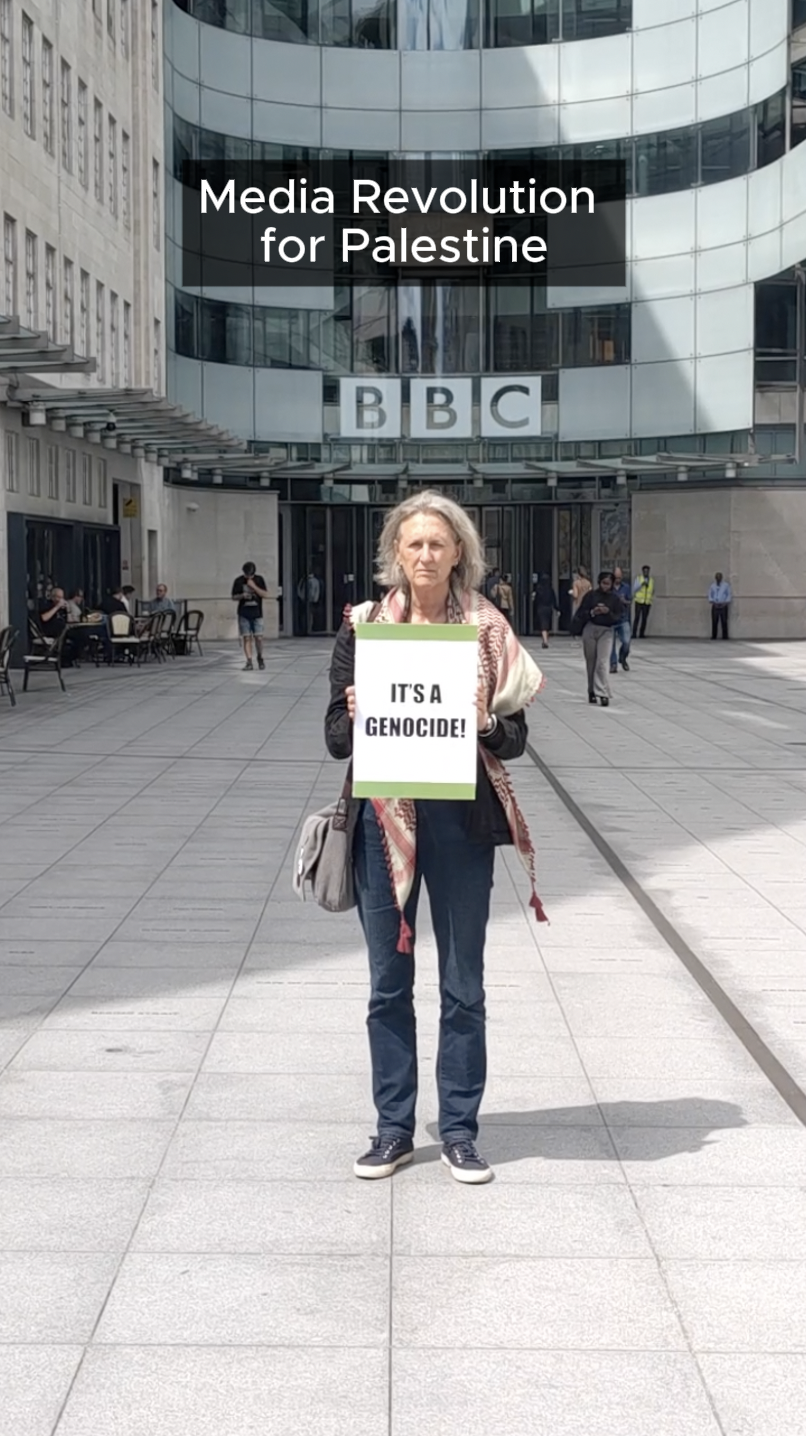
The BBC is the largest broadcaster in the world. Yet its own staff have described it as a “propaganda machine” — a phrase quoted in a 2025 article by The Guardian, highlighting the BBC’s reckoning over bias in its Israel-Palestine coverage (source).
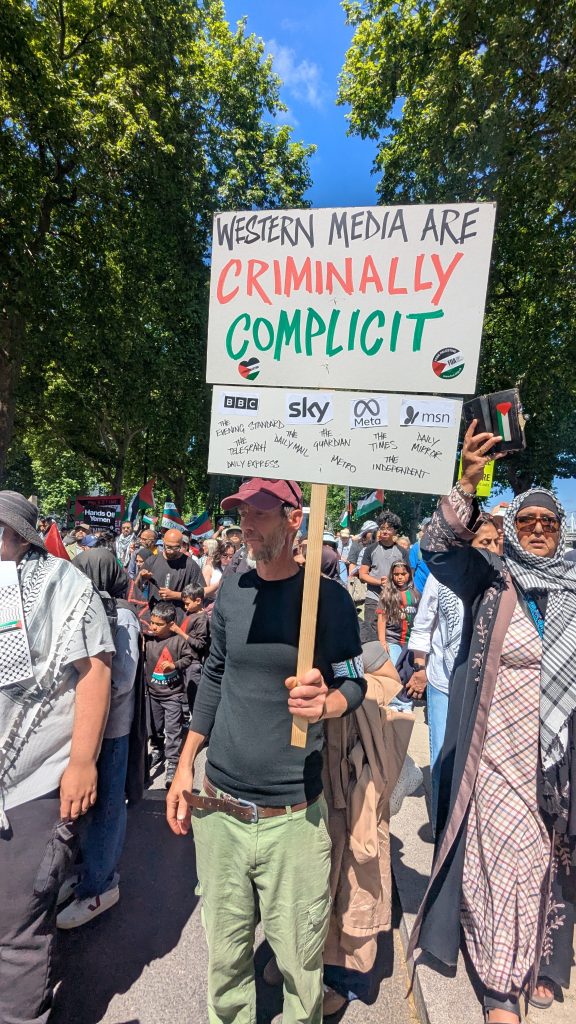
Reports from Media Lens (2024), FAIR (Israel/Palestine), and The New Humanitarian (2023) expose how mainstream media amplifies extremist Zionist narratives while downplaying Palestinian deaths, displacement, and the systemic nature of the violence.
A Human Rights Watch report (2023) further exposes how Meta’s algorithms disproportionately suppress Palestinian content — erasing critical documentation of human rights abuses and reinforcing wider patterns of media complicity.
A major study by the Centre for Media Monitoring (CfMM)found that the BBC consistently downplayed Palestinian suffering and perspectives while amplifying Israeli narratives in its Gaza war coverage. Analyzing nearly 4,000 articles and over 32,000 broadcasts from October 2023 to 2024, the report highlights a 34:1 Palestinian-to-Israeli death ratio and notes systematic omissions of crucial context, including genocidal rhetoric and war crimes allegations. The findings point to an institutional bias that has contributed to underreporting what many now view as a live-streamed genocide.
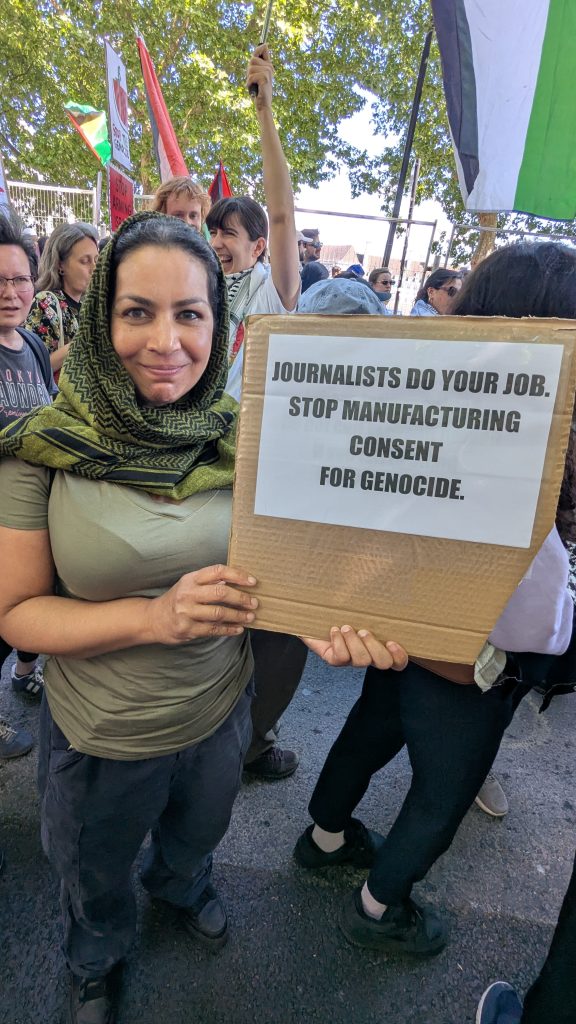
One of the starkest examples of this media failure is the refusal by many mainstream news organisations – including the BBC – to use the term “genocide” despite growing consensus among international law experts and human rights organisations that what is happening in Palestine is just this. This selective language reflects a wider culture of bias, erasure and editorial cowardice.
In contrast, many independent outlets speak clearly. They name the genocide. They amplify Palestinian voices. And they challenge the toxic narratives that have long dominated the headlines.
A Media Revolution means exposing these failures not just in the reporting – or lack of – of the many genocides around the world but in their creation in the first place. In the perpetuation of a world of lies and war.
It means working toward a world where journalism is accountable, independent, and just. It means shifting attention and support to movement media and citizen journalism. It means applying pressure to legacy outlets to improve while building new, decentralised ones that serve the public interest.
At the moment, the BBC take their lead directly from the billionaire press, and cover ‘what’s in the papers’.
So, let’s think together. Would genocide be happening in the first place, if malignant media – BBC and the billionaire media owners weren’t influencing politics and broadcasting hatred and division?
Switch your source. Challenge the root cause.
Change the media, change the future.
Photos by Media Revolution. Palestine march, London 2025.