Migration Films believes video can inspire change and foster understanding in a fragmented world. Their founder, Matt Robinson, has brought two decades of media experience to creating work with social purpose – whether in television or documentary making.
Migration Films produce all their Palestine, political, and investigative films independently – with no institutional funders or hidden agendas. This ensures their storytelling remains honest, transparent, and grounded in integrity.
They refuse to lock content behind paywalls. Every film made is open-source and free for all – no hierarchy of viewers, no restrictions. All they ask is that their work is credited when shared.
Today – on World News Day 2025 – we stand at a pivotal moment for news. The global stakes involved in society’s relationship with news information, and those who provide it, have never been higher.
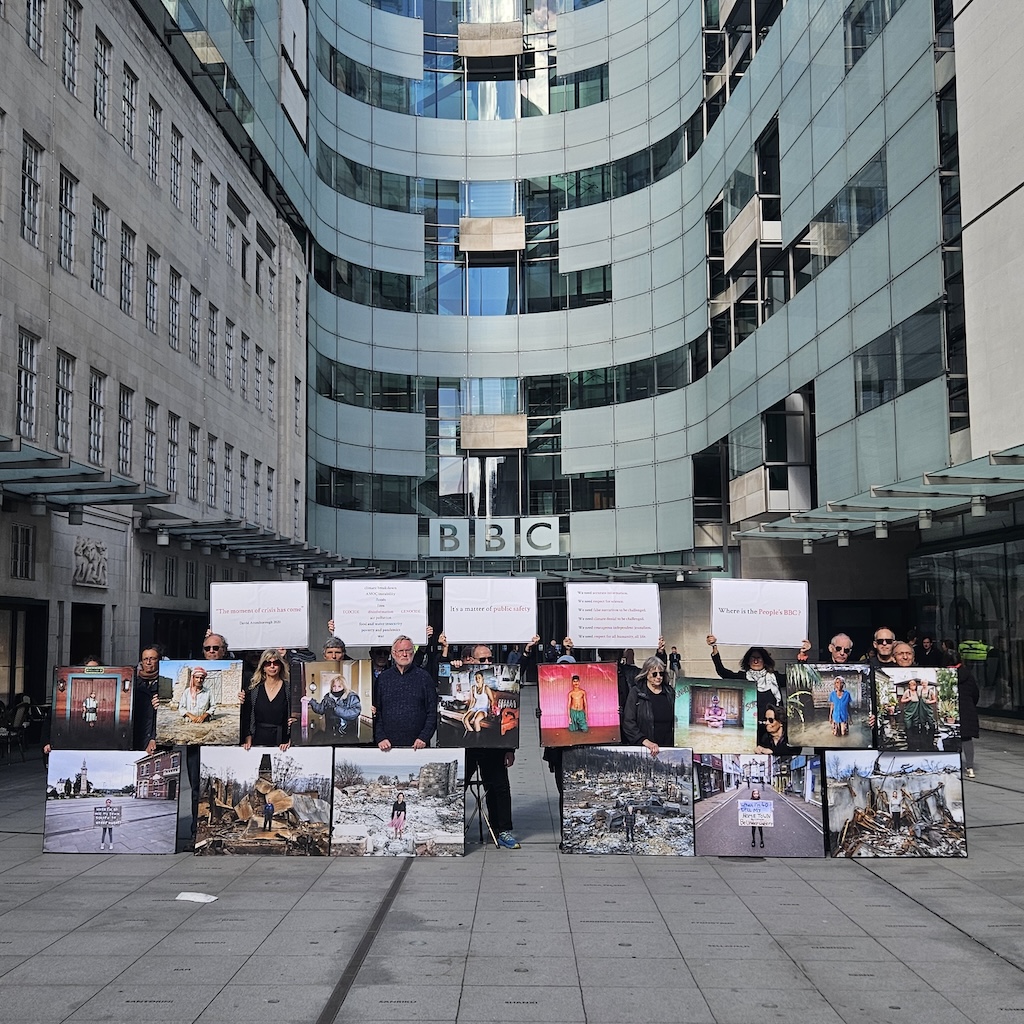
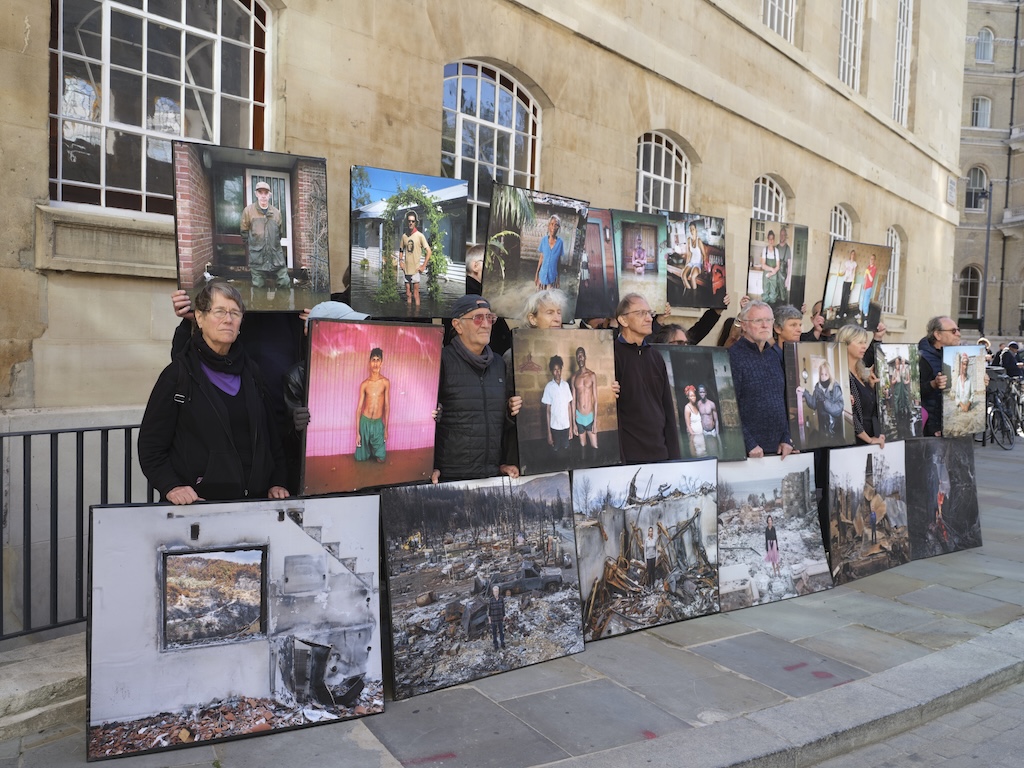
In defiance of the dangerous lack of honest reporting on the climate crisis – one of the most urgent issues we face – protesters from Stop Selling Lies marked World News Day with an arresting visual protest outside the BBC headquarters in London.
Placards and powerful images from world-renowned photographer Gideon Mendel were displayed in front of the BBC building. His portraits capture the human face of climate breakdown with brutal clarity; scenes of fire and flood, with people surrounded by their charred belongings or knee-deep in water. The accompanying placards demanded an end to disinformation and climate denial.
A question on one sign asked ‘Where is the People’s BBC?’
The BBC is the heart of the UK’s media system, and respected worldwide. Yet despite it being publicly funded, the public has no control over how it operates. This contradiction – between the promise of public service broadcasting and the reality of centralised, top-down control – is laid bare in Common Wealth’s recent report Our Mutual Friend: The BBC in the Digital Age.
At a time of escalating ecological collapse and misinformation crises, the BBC has the reach, capacity, and global platform to lead – but too often remains silent, compromised, or complicit – on ecocide. That complicity is mirrored in its failure to cover the Israeli genocide in Gaza. The paper explores how the BBC could transform into a truly democratic media institution – one that is citizen-governed, transparently structured, and accountable to the people it claims to serve.
The action outside the BBC demanded that media institutions reflect the reality millions are living through – not distort or dilute it. What would it mean to rebuild the BBC from the ground up, as an international example of a publicly-owned, publicly-guided media system fit for the digital age?
We live in an era of immediate access to an eye-watering amount of soul-shaking global news – but a deliberate degradation of media accuracy has become a widespread weapon wielded by wealthy and wicked interests. Trust in journalism is at an all-time low. And no surprise – a plague of disinformation drives division and, at its worst, props up systems of violence and oppression – towards people and the planet. More and more, people are beginning to see and feel this in their day-to-day lives.
From the distortion of facts to the outright manipulation of narratives, or even complete ignorance of pressing issues, the corporate stranglehold on information is a crisis we must confront.
Before us lies a battleground of disinformation, division and diversion. The need to champion accurate, fact-based reporting, media literacy, and custodianship of our news landscape is existential. The fight is on – for access to trustworthy information, for the freedom to speak and know the truth, and for the integrity and protection of global news systems from those who have corrupted them.
The work of the Media Revolution campaign is to connect the dots and coordinate a genuinely collaborative response that brings together the work of independent regulators, and those advocating for better ownership models and better representation. The campaign also supports creators of decentralised platforms with a strong and strategic sprinkling of nonviolent civil disobedience – the resistance needed to amplify these efforts.
It’s time to divest the attention economy away from malignant media practices and towards something else entirely – something we call movement media. News that serves people and planet. News that helps, not harms. News that takes courage to produce, requires dedication to protect, and is the fight of our time when it comes to building a fair and free society. The BBC, as a globally recognised and heard voice, could be a leader once again – of a new type of media ownership model that puts the people in charge.
From one awareness day to the next – Media Revolution is now just 38 days from Media Liberation Day. A good time to renew our pledge: to liberate minds, empower communities, and safeguard our collective right to a truthful and fair news system.
While we can’t exactly call today a happy #WorldNewsDay today, there is hope. Together, people are organising and mobilising toward a better media future, with real answers to some of the biggest questions our news landscape tackles today. Will you join them?
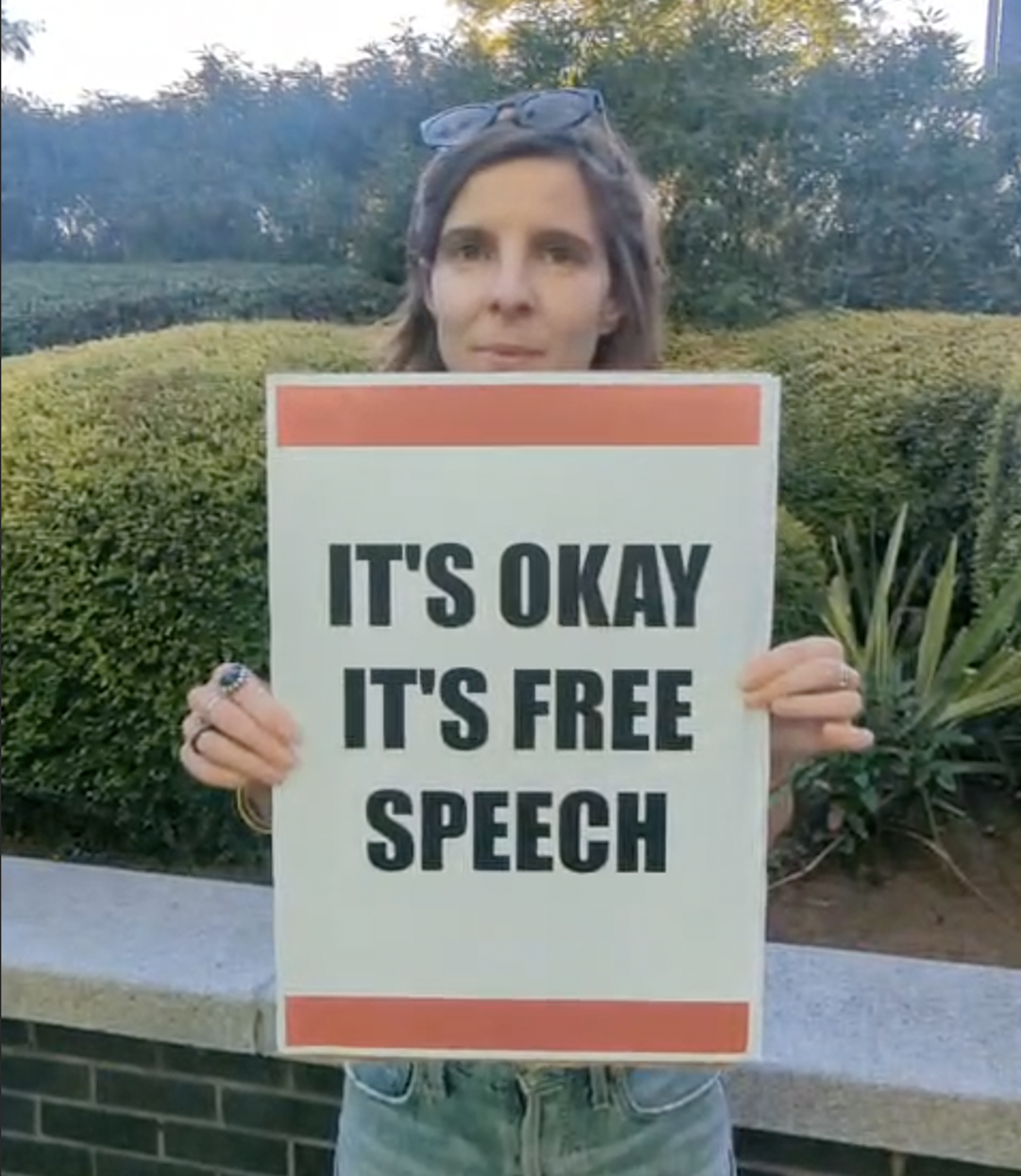
Freedom of expression is at the heart of democracy. Yet ‘free speech’ is constantly wheeled out as an excuse for attacks ondemocracy – blatant lies and propaganda that mislead the public, stir up division and provoke hate-fuelled violence.
Racist rage-baiting, vicious stereotyping and fabricated allegations are targeted at those who the speaker wants to shame or silence. Critics of this so-called ‘free speech’ are accused of promoting ‘cancel culture’ and stifling open debate.
The media lap it up, because angry, emotive slogans make strong headlines and grab attention online. Oh, and because in many cases those media outlets are politically and financially hand in glove with the powers behind the propaganda.
It’s not ‘free speech’ when someone’s paying for it.
A media revolution for free speech means reclaiming the true meaning and intent of the principle, and putting it into practice.
Carrying the torch for human rights
Progressive free speech has carried humanity forward. It gave abolitionists the power to challenge slavery, suffragettes the power to demand the vote, and civil rights leaders the power to break segregation. Anti-colonial leaders across Africa, Asia and Latin America relied on their voices — often branded as “subversive” or “terrorist” — to expose imperial violence and claim independence. These declarations were dangerous to the powers of their day, but they were the lifeblood of progress. Without the right to speak truth to power, none of these movements would have won through.
Yet history also shows us the power of hate speech in the media as a political weapon. Nazi propaganda in 1930s Germany did not only accompany the Holocaust — it deliberately prepared the ground for it. In Rwanda, instigators of the 1994 genocide of the Tutsi people used radio broadcasts to brand the Tutsi people “cockroaches” and openly call for their extermination.
In each case, words were not commentary – they were inflammatory. They lit the fuse. That is why international human rights law has always distinguished between expression that challenges power and expression that incites violence. The International Covenant on Civil and Political Rights, adopted by the UN in 1966, makes this distinction explicit .
Today, that distinction is being deliberately blurred – and in some cases, completely ignored. On 13 September 2025, Elon Musk appeared by video at an anti-migrant rally in London organised by the far-right activist Stephen Yaxley-Lennon, aka Tommy Robinson, and billed as a demonstration in support of free speech. Musk declared: “violence is coming to you” and “you either fight back or you die.” He also called for the dissolution of parliament before the next general election. UK Prime Minister Keir Starmer condemned the remarks as “dangerous and inflammatory” but stopped short of taking any action against Musk.
What makes Musk’s speech especially volatile is not just the content of his words, but the reach he can guarantee for them. In 2023, he reportedly instructed engineers at X (formerly Twitter)to change the platform’s algorithm so that his own posts would always appear more prominently in people’s feeds, whether they followed him or not . When someone who controls both message and distribution seeks to stir up violence, ‘free speech’ is a flimsy excuse for his actions.
And this is not only a British or American issue. In Myanmar, Facebook admitted that its platform had allowed hate speech against the Rohingya minority to spread unchecked, fuelling ethnic cleansing and crimes against humanity. In Brazil, disinformation was circulated on WhatsApp before and during elections, undermining trust in democratic institutions under President Jair Bolsonaro. In Kenya, coordinated online hate campaigns have stoked ethnic violence around elections, leaving scars that last for generations . In India, mainstream TV channels have been criticised for amplifying divisive rhetoric against Muslims, emboldening extremist mobs.
Across the world, the pattern repeats: words become weapons, with the media as their mouthpiece.
So what does a media revolution for free speech look like? Well, let’s go back to the reasons why freedom of speech was established – as a right, not a get-out clause.
First, it means redrawing the boundaries with clarity — and enforcing them. Speech that challenges power, including dissent or satire, must be protected; speech calculated to provoke violence or hatred must not. The Media Freedom & Accountability Bill — a new UK bill, (LINK) drafted and proposed by campaign group Hacked Off — shows that this is possible. It proposes enforceable duties for national newspapers and websites to prevent disinformation, protect against intrusion, and end discrimination and hate, while guaranteeing freedom of the press and protecting journalistic independence. This is how to protect dissent while refusing protection for harm.
Second, it means strengthening media literacy. If citizens can spot inflammatory rhetoric, fearmongering headlines, and fake “free speech” excuses for propaganda, we turn manipulation into empowerment. News Clubs – being set up by Media Revolution and others – are one way of introducing these skills into communities.
Third, it means real accountability for the powerful. Politicians, media hosts, and influencers who whip up hatred must face consequences — not applause — for putting lives at risk. The Media Freedom & Accountability Bill in the UK would empower OFCOM to investigate and fine outlets that spread harmful falsehoods, and require corrections to be published prominently – and this could set a precedent around the world.
Free speech is vital — it has carried every liberation struggle in history. But when it becomes a weapon of oppression, it violates the social contract of mutual respect and equality. Exercising free speech to incite harm or intolerance is not an act of liberty — it is a direct threat to the fabric of a democratic society.
In this context, exercising free speech to incite harm or intolerance is not only morally damaging but also a threat to the cohesive fabric of a society built on respect and inclusion. In short, it is anything but an instrument of freedom.
We need a media revolution for free speech: one that defends the powerless, challenges the harmful, and equips people everywhere to recognise the difference. Because ‘free speech’ is not okay when the malignant media decide whose voices to amplify.
Rippleffect is a strategic communications hub building tools and training for mass progressive communication in an age of overlapping, compounding crises.
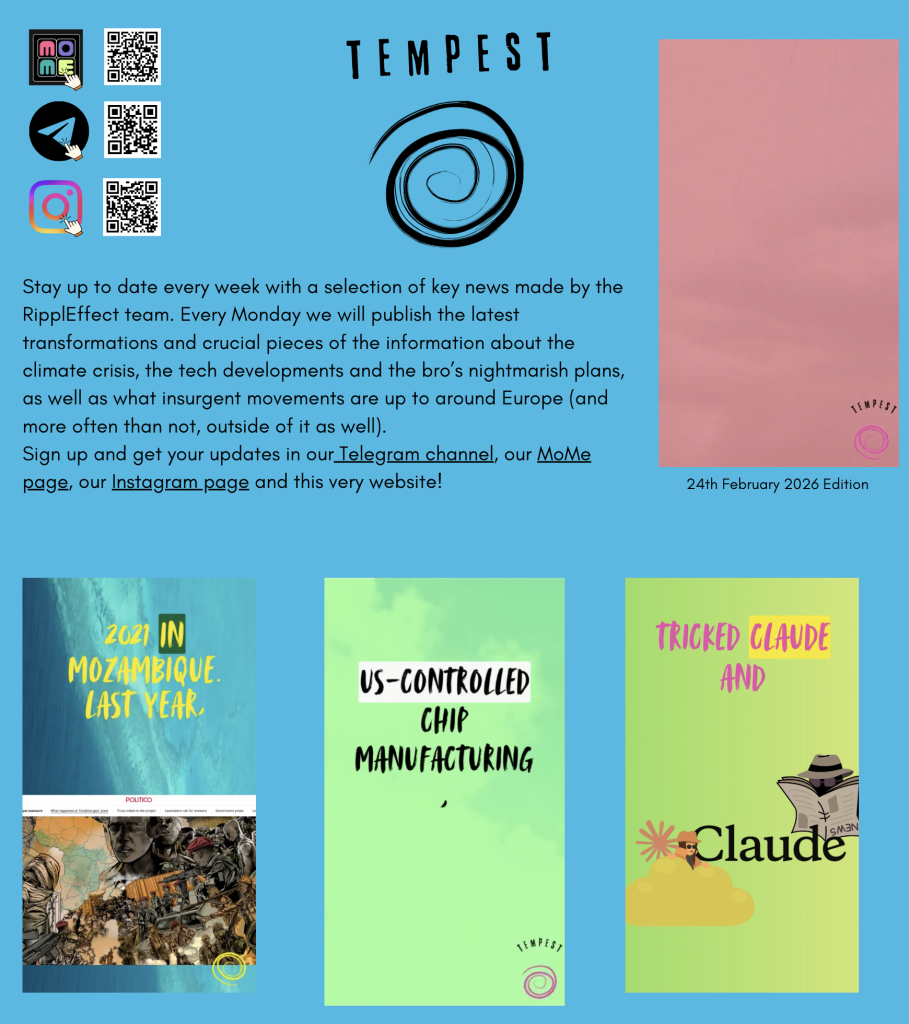
Stay up to date every week with a selection of key news made by the RipplEffect team and their broadcast Tempest. Every Monday the latest transformations and crucial pieces of the information about the climate crisis, the tech developments and the broligarch’s nightmarish plans, as well as what insurgent movements are up to around Europe (and more often than not, outside of it as well).
Rippleffect help movements and civil society sharpen narratives, coordinate message discipline, and scale trusted voices across networks — so truth travels faster than disinformation and communities can act together, at speed and scale.
Joining Media Revolution, Rippleffect say narrative power is movement power: when we align messages and share practical comms tools, we can lift independent media, sidestep billionaire gatekeepers, and reach the many — not the few.
Red Hot World is taking back the climate conversation on social media.
In a digital space dominated by fossil fuel spin, trolls and bots, they are building a font of funny, heartfelt and compelling content — videos, memes, blogs, podcasts and storytelling that offers a vision of a better future worth striving for.
Their aim is not to fight trolls, but to out-create them: gathering a network of the best communicators, creators, and influencers to flood online platforms with sharp, joyful, engaging stories of transition and possibility.
Their team includes scientists, social media experts, journalists and veteran movement communicators with experience from some of the most influential campaigns of recent years. With global networks, deep archives, and creative firepower, they are ready to show that the climate story can be retold with humour, hope and humanity.
They joined Media Revolution because controlling the story means controlling the future — and they know that by collaborating across movements, we can drown out billionaire propaganda with irresistible visions of change.
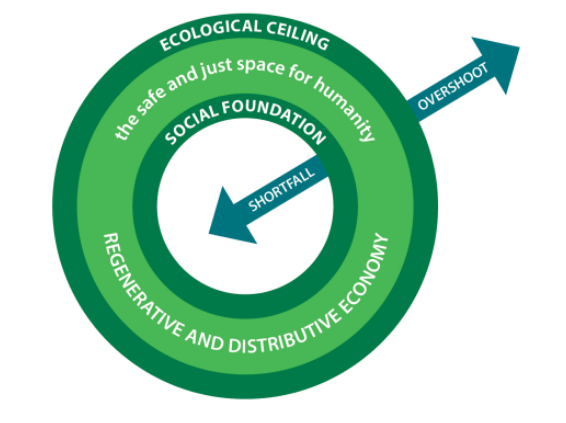
The Eco-Social Assembly is a movement rooted in the principle that every decision must pass three tests: does it serve society, does it protect the environment, and is it ethically grounded?
Their Tri-Axis Model creates a simple yet powerful framework for evaluating laws, policies, and actions against the needs of both people and the planet.
By holding governments and corporations to account through this lens, the Eco-Social Assembly offers a practical pathway toward just, sustainable futures.
They joined Media Revolution because the dominant media often narrows the debate to short-term profit and politics — instead of the ethical, ecological, and social balance humanity urgently needs.
The Climate Emergency Centres (CECs) are transforming empty buildings into vibrant, community-run hubs across the UK.
Each centre is a self-funding, inspirational space where local people, grassroots groups, and campaigners can come together to share skills, ideas, and resources in the face of climate and social crises.
From food co-ops to climate cafés, CECs offer places of resilience and connection, building the networks we’ll all need to weather the storms ahead.
The network of Climate Emergency Centres is growing and well connected.”By creating a network of centres in cities across the UK, we aim to share resources, skills, and ideas to strengthen resilience and adapt to social and environmental challenges”.
They joined Media Revolution because the media too often frames community responses as fringe or irrelevant — CECs know the truth: people everywhere are building the future from the ground up.
CEC were kind enough to host Liz from Media Revolution to present a webinar to their network in July 2025.
They bring together people, organisations, and campaigns around a shared vision: a world where human culture thrives in harmony with the living systems of Earth.
With resources, research, and tools for connection, The Planet Project works to reach tipping points of awareness and participation that can shift the trajectory of humanity. Their mission is nothing less than to help co-create a planetary culture rooted in cooperation and care.
They joined Media Revolution because a planetary shift cannot happen without transforming how stories are told.
Just Stop Oil was a highly effective nonviolent civil resistance campaign demanding that the UK government immediately halt all new oil, gas, and coal projects.
Known for bold, high-profile actions that forced the climate crisis into public consciousness, Just Stop Oil made sure the scale of the emergency could not be ignored.
Though they might have “hung up their high-vis,” they remain active in supporting court cases faced by activists, while staying deeply connected across the direct action space.
Their website calls out “Media shifting blame from their mates on mega yachts to the people in small boats”.
Their influence continues to ripple through movements and strategies for climate justice.
Just Stop Oil joined Media Revolution because the climate crisis is also a media crisis — too often downplayed, distorted, or ignored – and the activists who work tirelessly to raise awareness of this existential threat get treated as extremists by malignant media.
Just Stop Oil knows that without honest reporting, society cannot make the choices needed to secure a liveable future.
We thank Just Stop Oil for their support – and look forward to working with them for Media Liberation Day and beyond.