
Today – on World News Day 2025 – we stand at a pivotal moment for news. The global stakes involved in society’s relationship with news information, and those who provide it, have never been higher.
In defiance of the dangerous lack of honest reporting on the climate crisis – one of the most urgent issues we face – protesters from Stop Selling Lies marked World News Day with an arresting visual protest outside the BBC headquarters in London.
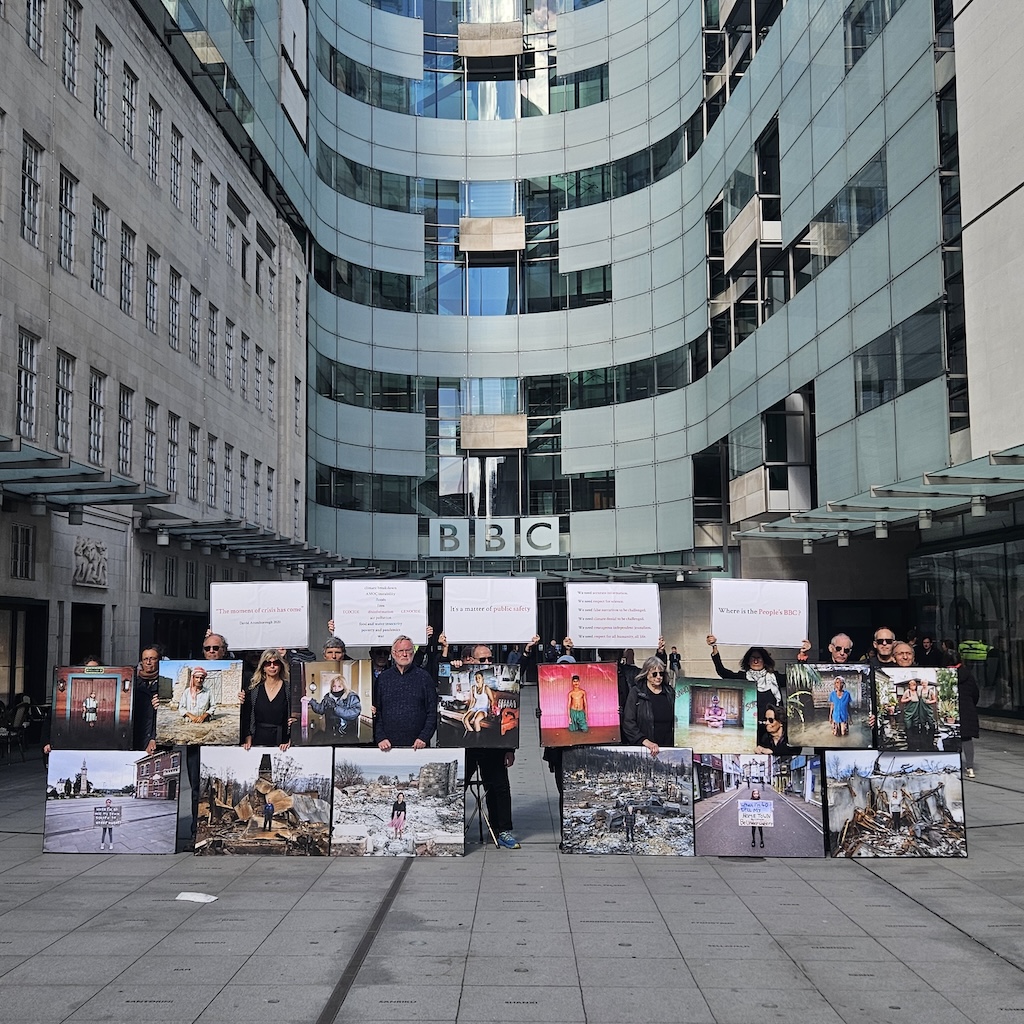
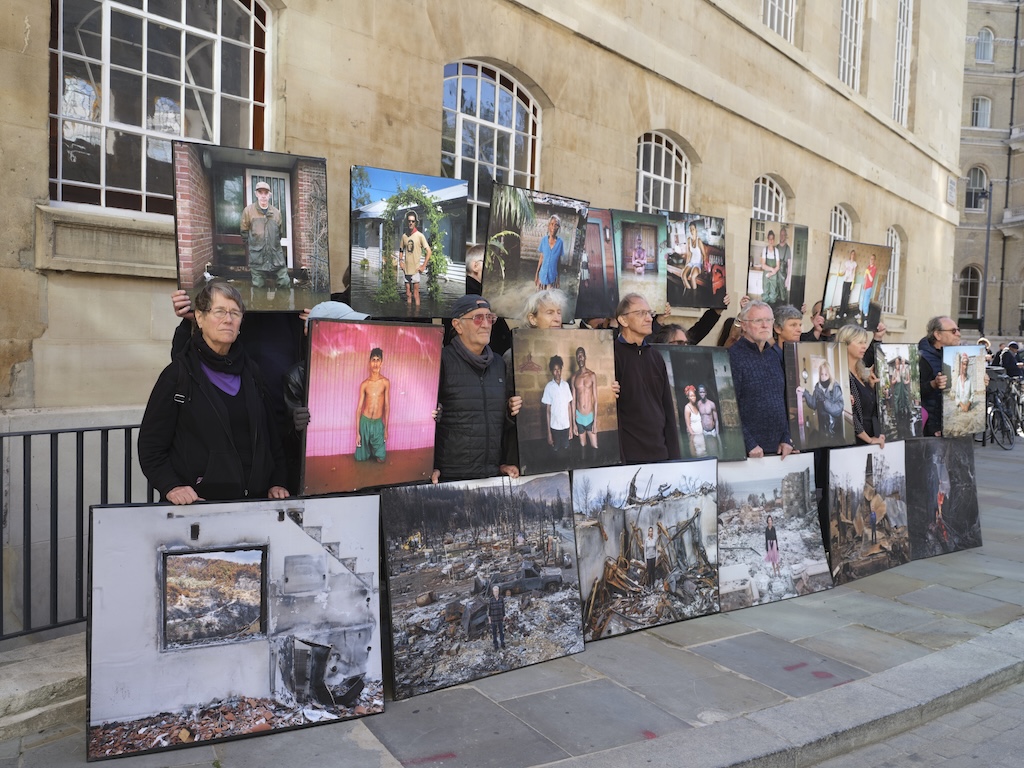
Placards and powerful images from world-renowned photographer Gideon Mendel were displayed in front of the BBC building. His portraits capture the human face of climate breakdown with brutal clarity; scenes of fire and flood, with people surrounded by their charred belongings or knee-deep in water. The accompanying placards demanded an end to disinformation and climate denial.
A question on one sign asked ‘Where is the People’s BBC?’
The BBC is the heart of the UK’s media system, and respected worldwide. Yet despite it being publicly funded, the public has no control over how it operates. This contradiction – between the promise of public service broadcasting and the reality of centralised, top-down control – is laid bare in Common Wealth’s recent report Our Mutual Friend: The BBC in the Digital Age.
At a time of escalating ecological collapse and misinformation crises, the BBC has the reach, capacity, and global platform to lead – but too often remains silent, compromised, or complicit – on ecocide. That complicity is mirrored in its failure to cover the Israeli genocide in Gaza. The paper explores how the BBC could transform into a truly democratic media institution – one that is citizen-governed, transparently structured, and accountable to the people it claims to serve.
The action outside the BBC demanded that media institutions reflect the reality millions are living through – not distort or dilute it. What would it mean to rebuild the BBC from the ground up, as an international example of a publicly-owned, publicly-guided media system fit for the digital age?
We live in an era of immediate access to an eye-watering amount of soul-shaking global news – but a deliberate degradation of media accuracy has become a widespread weapon wielded by wealthy and wicked interests. Trust in journalism is at an all-time low. And no surprise – a plague of disinformation drives division and, at its worst, props up systems of violence and oppression – towards people and the planet. More and more, people are beginning to see and feel this in their day-to-day lives.
From the distortion of facts to the outright manipulation of narratives, or even complete ignorance of pressing issues, the corporate stranglehold on information is a crisis we must confront.
Before us lies a battleground of disinformation, division and diversion. The need to champion accurate, fact-based reporting, media literacy, and custodianship of our news landscape is existential. The fight is on – for access to trustworthy information, for the freedom to speak and know the truth, and for the integrity and protection of global news systems from those who have corrupted them.
The work of the Media Revolution campaign is to connect the dots and coordinate a genuinely collaborative response that brings together the work of independent regulators, and those advocating for better ownership models and better representation. The campaign also supports creators of decentralised platforms with a strong and strategic sprinkling of nonviolent civil disobedience – the resistance needed to amplify these efforts.
It’s time to divest the attention economy away from malignant media practices and towards something else entirely – something we call movement media. News that serves people and planet. News that helps, not harms. News that takes courage to produce, requires dedication to protect, and is the fight of our time when it comes to building a fair and free society. The BBC, as a globally recognised and heard voice, could be a leader once again – of a new type of media ownership model that puts the people in charge.
From one awareness day to the next – Media Revolution is now just 38 days from Media Liberation Day. A good time to renew our pledge: to liberate minds, empower communities, and safeguard our collective right to a truthful and fair news system.
While we can’t exactly call today a happy #WorldNewsDay today, there is hope. Together, people are organising and mobilising toward a better media future, with real answers to some of the biggest questions our news landscape tackles today. Will you join them?